Real life. Real thoughts. The messy middle of motherhood, mental health, and figuring it out. The space between staying and leaving, between healing and hurting.
Why I Started The Messy Middle: How Writing Helped Me Heal, Reflect, and Leave Something Behind
Discover how journaling, self-reflection, and storytelling became part of my mental health journey. An honest look at healing, motherhood, bipolar disorder, BPD, and the unexpected legacy behind The Messy Middle.
~Tj🩷
7 min read
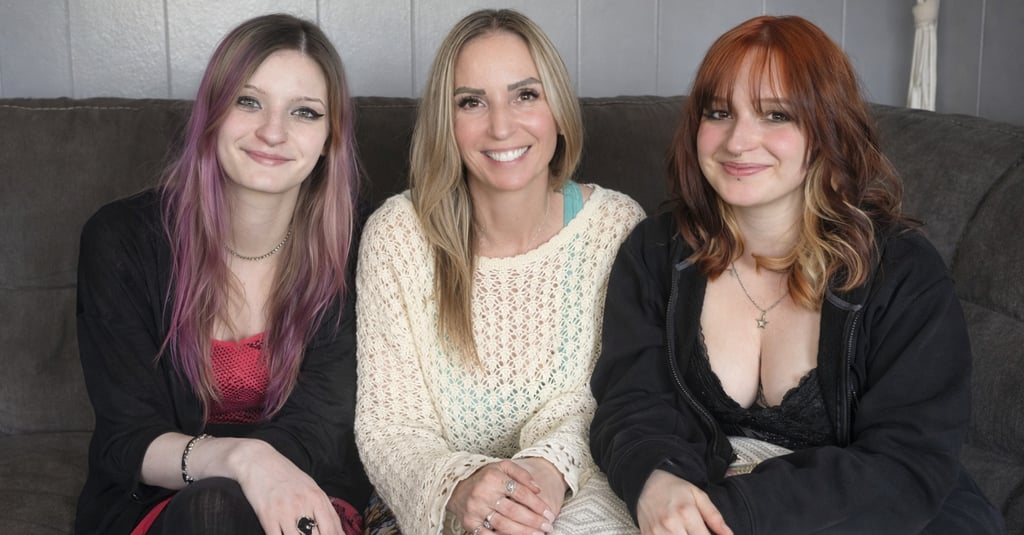
Writing started as a way to organize my thoughts during difficult seasons of mental illness, motherhood, grief, and personal growth. What began as a private outlet eventually became The Messy Middle—a place where honest stories, healing, and human connection matter more than perfection.
If you had asked me a few years ago why someone starts a blog, I probably would have given you the obvious answers. To build a business. To become an influencer. To share expertise. To create a brand.
Those answers make sense.
They're just not mine.
The truth is, I started writing because I was trying to make sense of my own life.
Like many people navigating mental health challenges, I spent years carrying around thoughts that felt too heavy, too complicated, or too difficult to explain. I struggled with anxiety. I struggled with bipolar disorder. I struggled with borderline personality disorder. I struggled with relationships, self-worth, grief, and the constant pressure to appear stronger than I felt.
What I didn't realize at the time was that writing would become one of the most valuable tools in my healing journey.
It started simply enough. A place to put my thoughts. A place to process difficult experiences. A place to untangle emotions that often felt impossible to organize inside my own head. Writing gave me the opportunity to slow down long enough to understand what I was actually feeling. Instead of carrying every thought around with me, I could place it somewhere. I could examine it. Reflect on it. Learn from it.
What surprised me was how often I would revisit something I had written and discover lessons I couldn't see while I was living through it.
That's the strange thing about growth.
Sometimes you don't recognize it until you're looking backward.
Research consistently shows that expressive writing and journaling can improve emotional processing, reduce stress, and help people recognize behavioral patterns over time. Mental health professionals often recommend journaling as a supplemental tool because writing creates distance between ourselves and our thoughts. Instead of being trapped inside an emotion, we can observe it, evaluate it, and better understand where it came from. While writing is not a replacement for therapy, medication, or professional support, it can become a powerful companion to all three.
For me, that's exactly what happened.
The more I wrote, the more I began noticing patterns. I saw how certain situations triggered specific emotional responses. I recognized behaviors I wanted to change. I identified fears that had been quietly influencing decisions for years. Most importantly, I started seeing evidence of growth that I would have otherwise missed.
The truth is that healing rarely happens in dramatic moments.
Most of the time, it happens quietly.
It happens when you recognize a trigger a little sooner. It happens when you pause before reacting. It happens when you apologize faster, communicate better, or recover more quickly after a difficult day.
Those small victories are easy to overlook.
Writing helped me see them.
As my collection of stories grew, something unexpected happened. People started reading them. They started reaching out. They shared their own experiences with anxiety, depression, bipolar disorder, trauma, motherhood, grief, and relationships.
Over and over again, I heard some version of the same sentence:
"I thought I was the only one."
That sentence stuck with me.
One of the hardest parts of struggling with mental health is the isolation that often comes with it. According to the National Alliance on Mental Illness, millions of adults experience mental health conditions every year, yet many continue to suffer in silence. Stigma still exists. Judgment still exists. Fear still exists. People worry about being labeled, misunderstood, or dismissed.
I understand those fears because I've lived them.
For a long time, I didn't openly discuss most of my diagnoses. Anxiety felt acceptable. Anxiety felt understandable. The rest felt more complicated.
Once labels enter a conversation, people often stop seeing the person and start seeing the diagnosis.
Suddenly everything gets filtered through assumptions.
Every reaction becomes a symptom.
Every emotion becomes something to explain away.
That experience is one of the reasons The Messy Middle exists.
I wanted a place where people could feel seen beyond their labels.
A place where someone could admit they were struggling without being reduced to a diagnosis.
A place where healing wasn't presented as a straight line.
Because it isn't.
Real life is messy.
Healing is messy.
Growth is messy.
Motherhood is messy.
Relationships are messy.
Everything worthwhile seems to happen somewhere in the middle.
That's why the name felt so right.
The Messy Middle isn't just about mental health. It's about the reality of being human. It's about the chapters of life that don't have clean endings yet. It's about navigating uncertainty, rebuilding after setbacks, learning new skills, breaking old patterns, and figuring things out as you go.
Most of us spend far more time in the middle than we do at the beginning or the end.
Yet we rarely talk about it.
We celebrate success stories after they're finished. We admire transformations after they've happened. We love before-and-after pictures because they give us closure.
But what about the middle?
What about the person who is still struggling?
What about the mother who is still learning?
What about the woman who is actively working on herself but hasn't reached the finish line yet?
Those stories matter too.
In many ways, they're the most important stories.
Motherhood taught me that lesson better than anything else ever could.
I had my daughters while I was still trying to figure myself out. Looking back, there are moments I wish I could redo. There are conversations I wish I had handled differently. There are times when my mental health affected me in ways I wish it hadn't.
I carry those truths with me.
But I also carry something else.
Growth.
As my daughters have gotten older, our communication has improved. We've had difficult conversations. I've apologized when necessary. I've listened to their experiences and perspectives. I've learned that being a good mother isn't about being perfect.
It's about being willing to grow.
It's about being willing to listen.
It's about being willing to take accountability without drowning in shame.
It's about showing your children that growth doesn't stop once you become an adult.
That lesson changed the way I view myself.
For a long time, I measured my worth through accomplishments. I looked at what other people had built and felt like I was falling behind. At 43 years old, there were moments when I genuinely believed I had nothing meaningful to leave behind.
No massive company.
No bestselling book.
No extraordinary accomplishments.
Just my story.
Then one day, I realized something.
Maybe my story matters.
Maybe all of our stories matter.
Because one day, long after I'm gone, my daughters will still have these words.
They'll know what I thought about.
They'll know what I struggled with.
They'll know what I learned.
They'll know how deeply I loved them.
They'll know that even when life was difficult, I kept trying.
And maybe that's what legacy actually is.
Not perfection.
Not success measured by someone else's standards.
Not money or status or achievements.
Maybe legacy is simply leaving behind something honest.
Maybe it's creating something that helps another person feel less alone.
Maybe it's sharing your experiences in a way that allows someone else to recognize themselves.
The more I've thought about it, the more I've realized that The Messy Middle isn't just a blog.
It's a collection of lessons, reflections, mistakes, victories, setbacks, and stories.
It's a record of growth happening in real time.
It's proof that healing doesn't require perfection.
It's evidence that progress can exist even when life still feels complicated.
Looking back, I realize I wasn't building a blog.
I was building a record of survival.
A collection of lessons learned the hard way.
A place where future versions of myself could look back and see evidence that growth was happening, even when it felt painfully slow.
Somewhere along the way, that personal record became something bigger than me.
It became a community.
Most importantly, it's a reminder that nobody has everything figured out.
Not me.
Not you.
Not anyone.
We're all learning as we go.
We're all making mistakes.
We're all carrying things other people can't see.
And we're all trying our best with the information, tools, and resources we have available at the time.
If there's one thing I hope readers take away from this blog, it's that they don't have to navigate those experiences alone.
Whether you're struggling with mental health, trying to become a better parent, rebuilding after heartbreak, learning new coping skills, healing from old wounds, or simply trying to make it through another difficult season, your story matters.
Your struggles matter.
Your growth matters.
And even if it doesn't feel like it right now, the life you're living is building a legacy too.
You may not see it yet.
I didn't either.
But sometimes the most meaningful things we leave behind are the things we never intended to build in the first place.
Maybe that's what The Messy Middle is really about.
Not having all the answers.
Not reaching perfection.
Not pretending everything is okay.
It's about showing up anyway.
It's about telling the truth.
It's about finding meaning in the middle of the mess.
And if my story helps even one person feel a little less alone, then every difficult chapter that led me here was worth writing about.
Let's start here.
~Tj 🩷
Frequently Asked Questions
Why is writing good for mental health?
Writing and journaling can help organize thoughts, process emotions, identify patterns, and improve self-awareness. Many therapists recommend journaling as part of a broader mental health toolkit.
Can journaling replace therapy?
No. Writing can be incredibly beneficial, but it is not a substitute for professional mental health treatment, medication, or therapy.
Why is the blog called The Messy Middle?
Because most of life happens in the middle. Not at the beginning of a journey and not at the finish line. Growth, healing, motherhood, relationships, and self-discovery often happen in the messy, unfinished chapters.
What topics does The Messy Middle cover?
Mental health, bipolar disorder, BPD, motherhood, relationships, healing, self-growth, beauty, life lessons, and the realities of navigating adulthood while still figuring things out.