Real life. Real thoughts. The messy middle of motherhood, mental health, and figuring it out. The space between staying and leaving, between healing and hurting.
Why I Finally Added Toner to My Skincare Routine (And Why I’m Obsessed With It)
I thought toner was an unnecessary skincare step until dry skin, tretinoin, and glycolic acid changed my mind. Here's why I now use a hydrating toner every day.
6 min read
For the longest time, toner felt like one of those skincare products people bought because somebody on social media told them to.
You know exactly what I'm talking about.
A perfectly lit video appears on your feed. Someone with flawless skin starts layering seventeen products onto their face while claiming each one completely transformed their life. Next thing you know, you're standing in the skincare aisle wondering if your entire routine is wrong because you don't own a toner, an essence, three serums, and something called a peptide mist that costs as much as a small utility bill.
That was me with toner.
I understood cleanser.
I understood moisturizer.
I understood sunscreen.
Those made sense.
Toner, however, felt like the skincare equivalent of a decorative throw pillow. Nice to look at. Probably unnecessary. Mostly there to make the routine seem more sophisticated.
Turns out I was completely wrong.
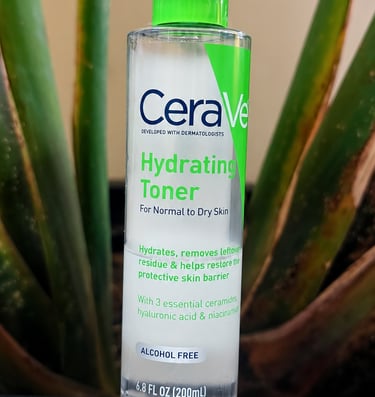
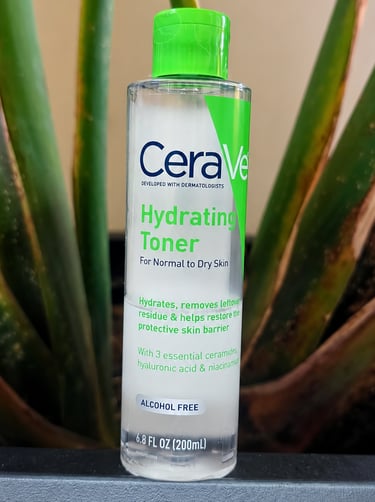
Recently, I started consistently using the CeraVe Hydrating Toner, and somewhere along the way I realized toner wasn't the pointless step I thought it was. In fact, it ended up becoming one of the most helpful additions to my skincare routine.
The funny thing is that I didn't discover this because I was chasing perfect skin. I discovered it because my skin was getting cranky.
Not "I forgot moisturizer once" cranky.
I'm talking dry, irritated, uneven, dull, tight-after-cleansing-but-somehow-still-oily cranky.
Which honestly feels rude considering how much money skincare already costs.
Part of the issue was completely my own doing. I use stronger skincare products that I genuinely love. Tretinoin has become a staple in my routine, and I use glycolic acid toner twice a week. Both are fantastic ingredients when used correctly. Both can improve texture, brightness, fine lines, and overall skin appearance.
Both can also make your face want to file formal complaints if you don't support your skin barrier properly.
That's where hydration entered the conversation.
And that's where toner suddenly started making sense.
A lot of people still hear the word "toner" and immediately picture those harsh alcohol-based formulas from the early 2000s. You remember them. The ones that smelled like a chemistry experiment and made your eyes water from three rooms away. Back then, skincare was basically a competition to see who could strip their skin barrier the fastest in the name of oil control.
If it burned, people assumed it was working.
If your face felt tight afterward, apparently that meant success.
Looking back, it was honestly a strange time for skincare.
Thankfully, things have evolved.
Modern hydrating toners are completely different. Instead of stripping your skin, they're designed to add hydration, support your skin barrier, soothe irritation, and prepare your skin for the products that follow. Think of them less as an extra step and more as the bridge between cleansing and moisturizing.
Once I started looking at toner that way, everything clicked.
The CeraVe Hydrating Toner contains ingredients like ceramides, hyaluronic acid, and niacinamide. Those ingredients aren't flashy. They're not trendy. They're not promising overnight miracles.
They're simply doing the boring but important work of helping your skin function properly.
Ceramides help support the skin barrier.
Hyaluronic acid helps attract and retain moisture.
Niacinamide can help calm redness, improve texture, and support overall skin health.
Nothing dramatic.
Just consistency.
And honestly, consistency is where most skincare results come from anyway.
One of the first things I noticed was how much softer my skin felt. Not oily. Not greasy. Not coated. Just healthier.
There's a difference between skin that looks shiny because it's producing excess oil and skin that looks healthy because it's properly hydrated.
I didn't fully appreciate that difference until recently.
For years I spent more time trying to fix my skin than support it.
The older I get, the more I realize those are two completely different approaches.
Somewhere along the way, skincare became obsessed with correction.
Fix the wrinkles.
Fix the texture.
Fix the pores.
Fix the discoloration.
Fix the dryness.
Fix the acne.
Fix everything.
The beauty industry has spent decades convincing us our faces are ongoing renovation projects.
Eventually I realized my skin wasn't asking to be fixed.
It was asking for support.
That mindset shift changed everything.
Instead of throwing stronger products at every problem, I started focusing on balance. Supporting my skin barrier. Maintaining hydration. Using active ingredients thoughtfully instead of treating my bathroom like a science experiment gone wrong.
Because a damaged skin barrier is miserable.
If you've experienced it, you already know.
Your face feels tight after cleansing.
Products suddenly sting for no reason.
Makeup starts sitting strangely.
Random dry patches appear.
Everything feels irritated.
Products you've used for years suddenly become a problem.
Then you panic and buy three new products trying to solve the issue you accidentally created.
Ask me how I know.
Multiple times.
Another thing I noticed after adding a hydrating toner was how much better my makeup applied.
This wasn't something I expected.
Foundation stopped clinging to random dry patches around my nose and mouth. My skin looked smoother throughout the day. Makeup seemed to wear more evenly instead of separating halfway through the afternoon.
Nothing humbles a person faster than spending money on foundation only to watch it actively try to escape your face by lunchtime.
Hydrated skin creates a better canvas.
It's really that simple.
Toner also helps remove leftover residue that cleansing sometimes misses. Even after washing your face, traces of sunscreen, makeup, cleanser, and oil can remain behind.
Think of toner as the final walkthrough before leaving the house.
Like realizing your phone is still sitting on the counter right before you walk out the door.
It's not always necessary.
But when it helps, it really helps.
Hydration becomes even more important when you're using active ingredients like glycolic acid and tretinoin.
I use glycolic acid twice a week because it helps tremendously with texture and dullness. Glycolic acid is an alpha hydroxy acid that exfoliates dead skin cells and encourages skin turnover. Over time, it can help improve brightness, texture, and overall skin appearance.
But there's definitely a balance.
Overdo exfoliation and your skin will absolutely let you know.
Dryness.
Redness.
Sensitivity.
Burning.
Irritation.
Suddenly your skincare routine feels less like self-care and more like a personal attack.
That's why hydration matters so much.
The same thing applies to tretinoin. Tretinoin remains one of the most researched and effective skincare ingredients available for improving acne, texture, fine lines, and overall skin renewal. It's incredible.
It's also incredibly capable of drying your face out if you're not careful.
Adding hydration around active ingredients has made a huge difference in how my skin tolerates them.
That's one reason I think social media sometimes makes skincare more confusing than it needs to be.
Everyone is chasing the next miracle product.
The next viral serum.
The next overnight transformation.
Meanwhile, the products making the biggest difference are often the boring ones.
Hydration.
Barrier support.
Consistency.
SPF.
Sleep.
Okay, maybe not sleep because apparently my body rejected that concept years ago.
But you get the idea.
The truth is most skincare doesn't produce dramatic overnight results. Healthy skin is usually built through small, consistent habits repeated over time.
That's probably why toner surprised me so much.
I expected nothing.
Instead, it quietly improved everything else.
My skin feels calmer.
Softer.
More balanced.
Less reactive.
Less tight after cleansing.
Healthier underneath makeup.
It didn't transform my face overnight.
It simply supported it.
And honestly, that's enough.
I also think stress impacts skin far more than people realize. Whenever I'm overwhelmed, anxious, emotionally drained, or running on terrible sleep, my skin reflects it almost immediately. It becomes duller, drier, more reactive, and less cooperative.
The connection between mental health and skin health is real.
That's why skincare has slowly become less about appearance for me and more about creating moments of care.
There's something calming about washing the day off.
Applying products slowly.
Taking care of your face instead of criticizing it.
Creating a routine that feels grounding instead of demanding.
Some nights, that routine becomes the most peaceful part of my entire day.
And maybe that's another reason toner surprised me.
I thought it was an unnecessary step.
Instead, it became part of a routine that helps my skin feel supported rather than constantly corrected.
No, toner isn't a miracle.
It won't erase pores.
It won't stop aging.
It won't turn you into one of those effortlessly hydrated women who wake up at 5 a.m., drink lemon water, and somehow have matching pajama sets.
If it could, I'd probably buy it by the gallon.
What it can do is support healthier skin.
And honestly, healthy skin usually looks better than aggressively perfect skin anyway.
The older I get, the less interested I am in perfection and the more interested I am in balance.
Balance in skincare.
Balance in life.
Balance in expectations.
My skin doesn't need perfection.
It needs support.
And honestly?
Same.
Frequently Asked Questions About Hydrating Toners
Do I really need a toner?
Not necessarily. But if your skin feels tight, dry, irritated, or dehydrated after cleansing, a hydrating toner can be a great addition to your routine.
Can I use a hydrating toner with tretinoin?
Yes. Hydrating products often help reduce the dryness and irritation associated with tretinoin use.
What's the difference between a hydrating toner and an exfoliating toner?
Hydrating toners add moisture and support the skin barrier. Exfoliating toners, like glycolic acid, remove dead skin cells and encourage skin turnover.
Can hydrating toner help mature skin?
Hydration becomes increasingly important as we age. While toner won't eliminate wrinkles, it can help skin appear healthier, plumper, and more comfortable.
Can toner improve makeup application?
Absolutely. Well-hydrated skin often provides a smoother canvas for makeup and may reduce patchiness caused by dryness.
What ingredients should I look for in a hydrating toner?
Look for ingredients like ceramides, hyaluronic acid, glycerin, niacinamide, and panthenol to support hydration and skin barrier health.
~Tj🩷