Real life. Real thoughts. The messy middle of motherhood, mental health, and figuring it out. The space between staying and leaving, between healing and hurting.
At-Home Microneedling: Worth the Pain
I willingly sit there and puncture my own face… and honestly? I’d do it 1,000 times over.
6 min read
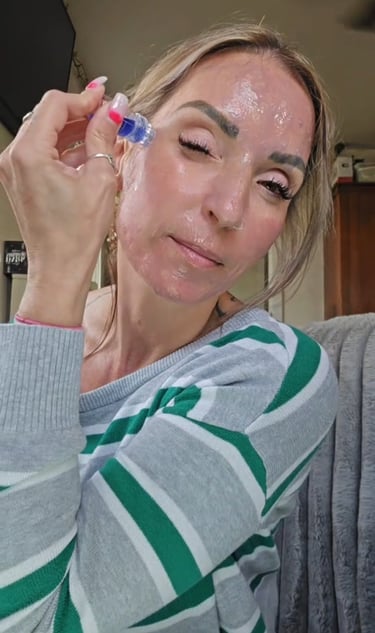
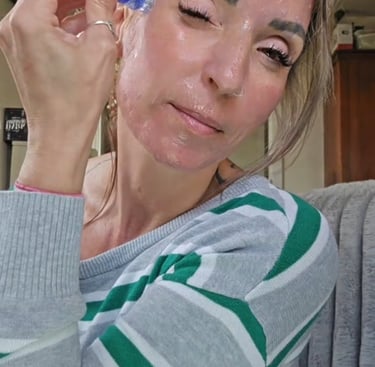
I've been in the beauty industry since 2001, which means I've spent nearly half my life helping people feel better about what they see in the mirror. Over the years I've watched trends come and go, miracle products rise and fall, and enough anti-aging promises to know that if every beauty claim were true, we'd all look twenty-five forever.
Unfortunately, that's not how any of this works.
The older I get, the more I realize that beauty is mostly a battle between reality and expectation. Reality says we're going to age. Expectation says we shouldn't. Reality says collagen naturally declines over time. Expectation says we should somehow maintain the same skin we had at twenty-two despite sleeping less, stressing more, and occasionally forgetting water exists.
Somewhere in my late thirties and early forties, I started noticing changes in my skin that I couldn't ignore. Not dramatic changes. Not the kind of thing another person would point out. The kind of changes only you notice because you spend entirely too much time looking at your own face.
The texture was different.
My skin didn't bounce back the same way.
Fine lines seemed more obvious.
And don't even get me started on collagen. Apparently after our twenties, collagen production gradually declines every year. Nobody asks your permission. Nobody sends a warning email. One day your skin is doing its thing, and the next day it's acting like it's ready for retirement.
That's what sent me down the microneedling rabbit hole.
At first, I was skeptical. I've been around beauty long enough to know that skepticism is healthy. Every year there's another device, another serum, another ingredient that supposedly changes everything. Most of them don't. Most of them promise dramatic results and deliver disappointment packaged in attractive marketing.
Microneedling was different because the science made sense.
Instead of forcing the skin to do something unnatural, it works with the body's own repair process. Tiny needles create controlled micro-injuries in the skin, which trigger healing responses and encourage collagen and elastin production. In simple terms, you're convincing your skin to rebuild itself.
The first time I tried it, I remember thinking this was either going to be genius or one of the dumbest decisions I've ever made.
Honestly, it could have gone either way.
Now let's be clear about something. Microneedling sounds a lot more terrifying than it actually is. If you tell someone you're intentionally poking tiny needles into your face, they tend to react like you've completely lost your mind. And to be fair, I understand their concern.
From the outside, it sounds ridiculous.
From the inside, it feels surprisingly logical.
Especially when you start seeing results.
I personally use the Qure Micro-Infusion System every other week. What I like about it is its simplicity. It doesn't require a complicated schedule, a beauty degree, or a second mortgage. It fits into my actual life, which matters because the best skincare routine isn't the most expensive one—it's the one you'll actually do consistently.
And consistency is where most people fail.
We live in a world obsessed with immediate results. We want next-day shipping, instant answers, overnight transformations, and before-and-after photos that look like magic. Skin doesn't work that way. Collagen certainly doesn't work that way.
Microneedling is a long game.
The first treatment isn't life-changing.
The second treatment isn't life-changing.
But the cumulative effect? That's where things get interesting.
Over time, I noticed smoother texture, healthier-looking skin, better overall tone, and something I didn't expect: patience. Microneedling taught me something about beauty that no product ever had. The best results don't come from intensity. They come from consistency.
That's true for skin.
It's true for fitness.
It's true for relationships.
It's true for mental health.
And honestly, that's probably why I connected with it so much.
If you've read my blog for any length of time, you already know that beauty and mental health are connected for me. Not because beauty cures anxiety or depression—it absolutely doesn't—but because self-care has become one of the ways I stay connected to myself when life feels chaotic.
There is something strangely grounding about spending time caring for yourself. Not because you're trying to become perfect, but because you're reminding yourself you're worth the effort.
That's what microneedling has become for me.
Not vanity.
Not perfection.
Maintenance.
A ritual.
A reminder.
A small act that says, "I'm still showing up for myself."
And maybe that's the bigger lesson hidden underneath all the skincare talk.
The older I get, the less interested I am in perfection and the more interested I am in health. Healthy skin. Healthy habits. Healthy expectations.
Because perfection is exhausting.
Healthy is sustainable.
Microneedling won't stop aging. It won't turn back time. It won't erase every wrinkle or magically transform your face overnight. What it can do is support your skin's natural processes, improve texture, encourage collagen production, and help you feel a little more confident in your own skin.
For me, that's enough.
Actually, it's more than enough.
It's why every other week I willingly sit down, grab my Qure device, question my life choices for approximately thirty seconds, and then proceed anyway.
Because after twenty-four years in beauty, I've learned that the things worth doing are rarely the things that promise overnight results.
They're the things that quietly work over time.
And microneedling is one of those things.
Frequently Asked Questions About At-Home Microneedling
Does microneedling really work?
Research suggests microneedling can improve skin texture, stimulate collagen production, and reduce the appearance of fine lines, wrinkles, and mild acne scars over time. The key word is time. Results are cumulative, not overnight.
How often should I microneedle at home?
I personally use my Qure Micro-Infusion System every other week. Consistency matters more than frequency. Always follow the manufacturer's instructions and avoid over-treating your skin.
What age should you start microneedling?
There isn't one perfect age. Many people begin in their late twenties or thirties when collagen production naturally starts declining. I started because I noticed changes in texture, elasticity, and overall skin quality.
Does microneedling hurt?
Let's call it "spicy."
For me, it's more uncomfortable than painful. During treatment I can feel the needles, and afterward my skin feels similar to a mild sunburn. It's temporary and completely worth it for the results.
How long does redness last after microneedling?
Most redness fades within 24 to 48 hours. Everyone's skin is different, but I usually notice mild redness the first day and then a healthy glow afterward.
Can microneedling help wrinkles?
Microneedling may help soften the appearance of fine lines and wrinkles by encouraging collagen and elastin production. It won't stop aging, but it can help improve overall skin quality.
Can microneedling help acne scars?
Many people use microneedling to improve the appearance of mild acne scars. Results vary depending on scar type, severity, and consistency of treatments.
Can I use tretinoin after microneedling?
Not immediately. I avoid tretinoin and other active ingredients right after treatment because my skin is already working hard to repair itself. Gentle hydration is my priority during recovery.
What skincare should I use after microneedling?
I focus on hydration, barrier repair, and gentle products. This is not the time to attack your face with every acid in your bathroom cabinet.
How long does it take to see microneedling results?
Most people notice a healthy glow within days, but collagen production takes time. Significant improvements often happen after several weeks or months of consistent treatments.
Is at-home microneedling as effective as professional microneedling?
Professional treatments typically use deeper needle depths and can produce more dramatic results. At-home systems are generally gentler and designed for maintenance and gradual improvements.
Can microneedling shrink pores?
Microneedling may help improve the appearance of enlarged pores by supporting collagen production around the pore structure, creating a smoother overall appearance.
Can I wear makeup after microneedling?
I personally prefer giving my skin time to breathe and recover before applying makeup. Freshly treated skin deserves a little peace and quiet.
Is microneedling safe for sensitive skin?
Sensitive skin can often tolerate microneedling, but it's important to patch test products, follow instructions carefully, and avoid overdoing treatments.
What are the biggest microneedling mistakes?
The biggest mistakes I see are:
Using active ingredients too soon
Not keeping equipment sterile
Expecting overnight results
Over-treating the skin
Skipping sunscreen afterward
Is microneedling worth the money?
For me, absolutely. I've spent over twenty years in beauty, and very few treatments have earned a permanent place in my routine. Microneedling is one of them.
~Tj🩷