Real life. Real thoughts. The messy middle of motherhood, mental health, and figuring it out. The space between staying and leaving, between healing and hurting.
When Motherhood Starts to Feel Different
Motherhood changes as children grow older, and for many moms, that emotional shift can bring feelings of anxiety, guilt, overthinking, and fear of emotional distance. This honest motherhood article explores adult daughters, mental health, emotional attachment, and learning how to recognize quieter forms of love.
7 min read
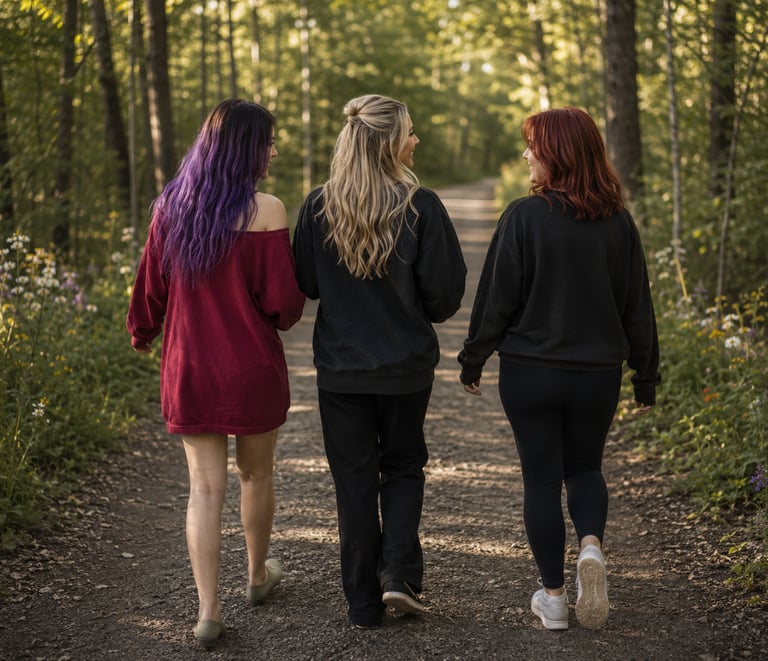
Watching your children grow up is beautiful—but no one talks enough about the quiet grief that can come with no longer feeling needed in the same way.
There’s a strange heartbreak that comes with your children growing up that nobody really prepares mothers for. Not that they stop loving you. Not that the relationship disappears. The role you once held in their lives simply begins to shift. If you already struggle with anxiety, emotional sensitivity, bipolar disorder, BPD, or overthinking, those shifts can feel much bigger than they actually are. At least they do for me.
Mother’s Day felt different this year. Not terrible. Not dramatic. Just quieter than I expected. I saw Kaylee briefly to take her to work. There wasn’t a big “Happy Mother’s Day,” no handwritten card, no long family breakfast, no emotional movie-moment memory. Hayden stopped by for a little while, gave me gifts, then left shortly after. The next day was my birthday. Kaylee texted me happy birthday. Hayden brought home flowers from both of them—roses and orchids, my favorites—and a balloon since she knows I love balloons.
Logically, I know those things matter. The flowers mattered. The gifts mattered. The thought mattered. Emotionally though, part of me still wondered if I had somehow done something wrong.
That’s the exhausting part about living inside a brain that struggles with emotional regulation and overthinking. My mind doesn’t simply let moments exist. It investigates them. It looks for hidden meaning in small details. No card suddenly feels personal. A quick visit starts feeling like distance. Someone else driving your daughter to work turns into “Did I do something wrong?” “Did she not want me there?” “Am I becoming less important?”
I know some of this is my mental illness trying to prepare me for rejection before rejection even exists. Understanding that logically still doesn’t stop the emotional reaction. That’s something I wish more people understood about mental health. Self-awareness does not magically shut your thoughts off. Sometimes it only means you recognize the spiral while it’s actively happening.
Lately, I’ve realized one of my deepest fears is ending up emotionally distant from my daughters in the same way I sometimes feel emotionally distant from my own mother. That fear sits deeper than I like admitting. My biggest fear was never raising perfect daughters. It was losing emotional connection with them.
I think many mothers quietly struggle with this when their children become adults, though very few people talk about it honestly. Society prepares women for pregnancy, toddlers, school years, teenage years. Nobody really prepares mothers for the emotional adjustment that comes once your children stop needing you in obvious ways.
One thing I wasn't prepared for was realizing that motherhood comes with its own version of grief.
Not the kind of grief that comes from loss.
The kind that comes from change.
I don't think people talk about that enough. We celebrate every milestone our children reach. First steps. First day of school. First job. First apartment. First serious relationship. We cheer them on because that's what parents are supposed to do. We spend years helping them become independent, capable adults.
What nobody explains is that every milestone they gain often requires us to let go of a version of motherhood we've known for years.
When children are young, being needed is constant. It's obvious. They need help finding shoes. They need rides. They need advice. They need snacks. They need hugs. They need someone to solve problems that feel enormous in their little worlds. Motherhood during those years can be exhausting, but it also provides something many mothers don't realize they're relying on.
Certainty.
You know where you fit.
You know your role.
You know you're needed.
Then slowly, almost without warning, things begin to change.
The questions become less frequent.
The phone calls become shorter.
The visits become less predictable.
The dependence fades.
And if you're someone who already struggles with anxiety, emotional sensitivity, overthinking, or fear of abandonment, that shift can feel much bigger than it actually is.
That's been one of the most challenging lessons for me.
Learning that being needed and being loved are not the same thing.
For years, those two things felt connected. When my daughters needed me constantly, love felt obvious. It felt visible. As they've gotten older, I've had to learn how to recognize quieter forms of love. Love that shows up as a text message. Love that remembers your favorite flowers. Love that checks in unexpectedly. Love that exists even when someone is busy building a life of their own.
That sounds simple.
Emotionally, it isn't always.
Especially when your brain naturally looks for evidence that people are pulling away.
Fear has a way of turning ordinary moments into emotional investigations. A delayed response becomes a question. A shorter visit becomes a concern. A missed card becomes a story. Before you know it, you're collecting evidence for a case that never existed in the first place.
That's the difficult thing about emotional dysregulation. Sometimes you know the facts and still struggle with the feelings.
Logically, I know my daughters love me.
Logically, I know they're growing into independent adults.
Logically, I know healthy independence isn't rejection.
Emotionally, there are still moments where it feels different.
That's where growth has been happening for me.
Not by becoming less emotional.
Not by pretending I don't care.
Not by shutting down the part of me that feels deeply.
But by learning not to automatically believe every fearful story my brain creates.
When children are little, motherhood feels loud. The love feels loud too. Sticky notes. Handmade cards. Tiny hands grabbing yours. Random hugs. Hearing “mom” shouted from another room every five minutes. Even the chaos carried reassurance since you always knew where you stood. You were needed constantly.
Back then, motherhood felt exhausting in a completely different way. I remember days where I wanted silence so badly I could physically feel it in my body. Days where the TV was too loud, someone needed something every ten seconds, my brain felt like it had twenty tabs open at once. Still, underneath all the exhaustion was certainty. Motherhood had structure then.
Now my girls are older. Kaylee is adulting. Building routines, working, figuring out who she is outside of this house. Hayden is reaching that stage where friendships, relationships, independence, and her own future naturally become a bigger part of her world too. That’s normal. Healthy even.
Still, nobody warns mothers that healthy independence can hurt emotionally sometimes. One day you wake up and realize your children no longer need you in the same loud, obvious ways they once did. That shift can feel lonely if you aren’t prepared for it.
Part of me still expects motherhood to look the way it used to. More time together. More excitement. More visible reassurance. When I don’t get those things exactly how my heart imagined them, my brain immediately starts translating silence into rejection. Adulthood is not rejection though. Independence is not abandonment. I’m trying really hard to remind myself of that.
If I stop and actually look at the facts instead of my fears, I can clearly see the love is still there. It simply looks different now. Quieter. It looks like Hayden remembering I love balloons. It looks like roses and orchids since they know those are my favorite flowers. It looks like random texts, small conversations, sitting in the same room quietly while everyone does their own thing.
Maybe that’s what adult relationships with your children become. Less constant. More intentional.
The difficult part for me has been learning not to measure love only through attention, time, reassurance, or how needed I feel. If I’m being completely honest, a lot of my fear comes from feeling replaceable. That’s probably the BPD talking.
Fear of abandonment has a way of turning ordinary moments into emotional investigations. My brain starts collecting evidence for stories that may not even be true. “They didn’t stay long enough.” “They didn’t say enough.” “They seem happier with other people.” “They don’t need me anymore.”
Suddenly I’m trying to crack some invisible emotional code that probably doesn’t even exist.
That’s what emotional dysregulation can feel like sometimes. You can know something logically while emotionally feeling the complete opposite. Logically, my daughters love me. Emotionally, “What if they’re slowly pulling away from me?” Logically, they’re growing up. Emotionally, “What if I’m becoming less important in their world?”
It’s exhausting trying to separate feelings from facts sometimes, especially when your brain naturally leans toward fear.
One thing DBT talks about often is “checking the facts,” and lately I feel like I’m constantly trying to do that in my own head. What are the actual facts here?
The facts are simple. They remembered me. They bought thoughtful gifts. They know the little things that matter to me. Hayden checks on me often. They still include me in their lives.
Those are facts.
The fear is the story my brain creates around the quiet spaces.
Maybe that’s what healing looks like right now. Not becoming less emotional. Not pretending I don’t feel deeply. Not forcing myself to stop caring. Learning not to automatically believe every emotional conclusion my brain hands me.
I don’t want fear shaping my relationship with my daughters. I don’t want them feeling emotionally responsible for constantly reassuring me. I also don’t want to emotionally shut down from fear of being hurt. I want balance. Connection. Honesty. I want the kind of relationship where my girls know they can always come home emotionally, even while building lives outside of me.
Maybe part of building that healthy mother-daughter relationship means accepting that love evolves.
When children are young, motherhood is physical closeness. When children become adults, motherhood becomes emotional trust. That’s a completely different kind of connection. Quieter. More intentional. One that requires letting go. One that asks mothers to stop defining their worth by how needed they are.
Honestly, that part is hard.
Especially for mothers who spent years making motherhood a major part of their identity. When your children grow up, you don’t only lose routines. You lose versions of yourself too. The version that packed lunches. The version that solved every problem. The version that was needed for every decision.
Somewhere inside all of that, you’re forced to rediscover who you are outside of constantly being needed.
That’s part of why this season of life feels so emotional for me. It’s not only about my daughters changing. It’s about me changing too. Learning how to still feel important without constant reassurance. Learning how to trust quieter forms of love. Learning how to stop interpreting every change as emotional distance.
That doesn’t mean I’ve mastered it. There are still days where my brain spirals. Still moments where I overanalyze things they probably didn’t even think twice about. Still moments where I wonder if I’m too emotional, too sensitive, or too much.
Still, there are moments now where I stop myself and remember something important: Love does not always look the same in every season of life.
Maybe motherhood was never supposed to stay frozen in one version forever. Maybe part of raising adult daughters is learning how to grieve old seasons while still appreciating the beauty of the new one.
Even though motherhood feels different now, the love is still here. It just sounds quieter than it used to.
Maybe quiet love still counts just as much.
~Tj 🩷