Real life. Real thoughts. The messy middle of motherhood, mental health, and figuring it out. The space between staying and leaving, between healing and hurting.
When Understanding Doesn’t Fix Everything
A raw mother-daughter healing article about emotional distance, generational patterns, childhood wounds, attachment, forgiveness, and learning that understanding someone doesn’t always erase the grief of what you needed.
8 min read
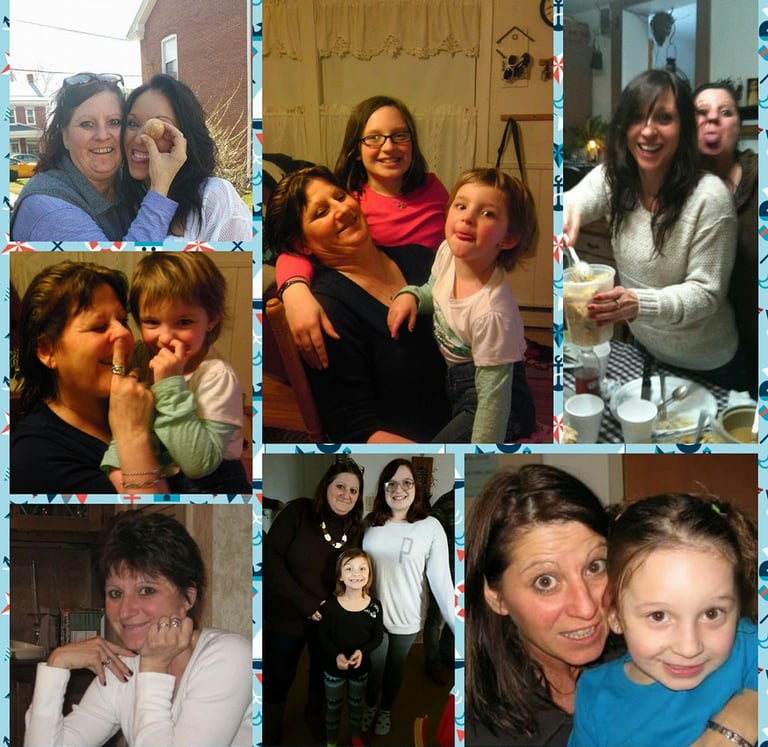
Not every breakthrough feels like relief. Sometimes understanding your mother brings clarity, compassion, and grief all at once.
Not every breakthrough feels like relief. Sometimes the moment you finally understand something is the exact moment you realize how much there still is to grieve. That’s the part people don’t talk about enough when it comes to healing family relationships. We think understanding will make everything lighter, like once the missing piece clicks into place, the ache will magically loosen. Sometimes it does. Other times, understanding simply gives the pain a name.
I had a family session with my mom, and for the first time, I can honestly say it went well. Not fake well. Not “we sat in the same room and avoided the real stuff” well. Actually well. There was effort. There was honesty. There were moments where it felt like we were hearing each other instead of just waiting for our turn to defend ourselves. That alone matters more than I can fully explain, because when a relationship has years of distance, silence, misunderstanding, and emotional bruises behind it, even one honest conversation can feel huge.
I’m grateful she came. I really am. Her showing up spoke volumes to me. Her opening up spoke even louder. That was the version of her I’ve wanted for so long—the version who leans in instead of pulling away, the version who tries, the version who lets me see something real. For once, it didn’t feel like I was reaching into empty air hoping to grab onto something. It felt like there was actually something there. And that matters.
But what I didn’t expect was how much understanding would hurt.
During that conversation, I learned that my mom didn’t grow up with affection. She wasn’t held the way a child should be held. She wasn’t shown love in the soft, steady, reassuring way I have spent so much of my life craving from her. And suddenly, things started to make sense in a way that honestly felt heavier than not understanding at all. Because it meant the distance didn’t start with me. The lack of softness, the missing comfort, the kind of affection I kept looking for and couldn’t seem to find—it was there long before I was.
That is the strange thing about generational patterns. You can spend your whole life thinking something began with you, only to realize you were born into a story that had already been unfolding for decades. A mother who wasn’t held may struggle to hold. A child who wasn’t comforted may grow into a parent who doesn’t know how to offer comfort naturally. Emotional inheritance doesn’t always look like obvious trauma. Sometimes it looks like a family where nobody hugs first, nobody says the soft thing, nobody knows how to sit close when someone is falling apart.
Understanding that gave me compassion for my mom, but it didn’t erase the little girl in me who needed more. That’s where healing gets complicated. I can see her differently now. I can understand why affection didn’t come naturally. I can look at her story and say, “Okay, that makes sense.” But understanding why something happened doesn’t suddenly remove what it felt like to live without it. A reason is not the same thing as repair. Compassion is not the same thing as completion.
That’s important for anyone working through a difficult parent relationship. Sometimes we think if we understand our parents, we have to stop hurting. We think empathy means we’re no longer allowed to grieve. But healing doesn’t work like that. You can understand your mother’s limitations and still feel the ache of what you didn’t receive. You can have compassion for her childhood and still mourn your own. You can forgive someone and still be impacted by what happened. Two things can be true, and usually they are.
This also made me look at myself in a way that was not exactly warm and fuzzy. More like emotional sandpaper. Because I could suddenly see how the pattern didn’t stop with my mom. It moved through me too. I started thinking about my own daughters and the ways I may not have always given them the affection they deserved. Not because I didn’t love them. I love them more than anything. But love and expression are not the same thing. You can love someone deeply and still struggle to show it in the way they need to receive it.
That realization is heavy because now I’m not only processing what I didn’t get. I’m also processing what I may not have given. That’s a different kind of pain. It forces you to stop looking only backward and start looking at what may have passed through you. That’s where generational healing becomes more than a pretty phrase people slap on Instagram over a sunset. It becomes accountability. It becomes noticing your patterns before they become your children’s wounds. Cute? No. Necessary? Unfortunately, yes. The universe really said, “Here, have self-awareness,” and then handed me a shovel.
But maybe that’s also where change begins. Not in pretending we had perfect childhoods. Not in blaming our parents forever. Not in drowning ourselves in guilt for the ways we didn’t know better. Change begins when we can finally see the pattern clearly enough to interrupt it. I can’t go back and receive what I needed as a child. I can’t go back and become a perfectly affectionate mother from day one. But I can become more aware now. I can soften now. I can apologize now. I can show love differently now. I can let my daughters see me learning instead of pretending I already know everything.
And then there was another layer to the conversation that I didn’t expect to sit with so heavily. I’ve always known that my dad slept with my aunt—my mom’s sister. Even writing that feels gross, like my brain wants to throw the whole sentence into traffic. For most of my life, I could not understand how my mom stayed close to her after that. I couldn’t understand how someone forgives a betrayal like that, especially from a sister. I couldn’t understand how that relationship survived something that would have made me want to launch someone into the sun. Respectfully. Maybe.
But during the session, my mom explained it. She let me into her perspective and the way she survived it. For the first time, I understood more than just the fact of what happened. I understood the emotional math she used to live with it. I understood why she made the choices she made, even if I don’t think I could make the same ones. That’s another part of adulthood nobody warns you about: you eventually start seeing your parents as people with their own heartbreak, betrayal, fear, loyalty, denial, survival, and reasons that existed before you were old enough to understand them.
That understanding didn’t make it lighter either. It made it more layered. Because once you understand someone’s pain, it becomes harder to flatten them into one simple role. My mom wasn’t just “distant.” She was also a person who didn’t receive affection. She wasn’t just someone whose choices confused me. She was also someone who had to make sense of betrayal from the people closest to her. Seeing those layers doesn’t erase what hurt me, but it changes how I hold it. It makes the story less black and white, which is deeply annoying because black and white is so much easier. Healing really does have the audacity to ask for nuance.
That’s where I am now: sitting with the fact that the version of my mom I’ve been waiting for may not be the version I get. Not because she doesn’t care. Not because there is no love. But because she can only meet me from what she knows, what she lived, and what she has the capacity to offer. That doesn’t mean I was asking for too much. It means what I needed and what she was able to give were never fully aligned. That is a grief all by itself.
There’s a quiet grief in letting go of the mother you imagined while learning how to have a relationship with the mother in front of you. There’s grief in accepting what is, especially when what is isn’t terrible but still isn’t what your heart hoped for. And there’s grief in realizing that something can make sense and still not feel okay. That part matters. Understanding does not automatically turn hurt into peace. Sometimes it simply helps you stop blaming yourself for why the love felt incomplete.
This is the reader-value part I wish someone had told me sooner: a breakthrough is not always a finish line. Sometimes it’s the beginning of a new grief. When you finally understand why someone couldn’t give you what you needed, you may feel compassion, but you may also feel sadness for the child version of you who kept waiting. You may feel relief that it wasn’t your fault, and heartbreak that it happened anyway. You may feel grateful for the conversation and still leave wishing they had hugged you. Healing is weird like that. It loves to hand you two opposite emotions and say, “Here, carry both.”
And if I’m being completely honest, the only thing I really wanted after that session was a hug. A real one. The kind that says everything without needing words. The kind that makes you feel, for one second, like all the weight you’ve been carrying can drop to the floor. And it didn’t happen. Maybe she didn’t think of it. Maybe she didn’t know I needed it. Maybe she doesn’t know how to give that kind of affection because nobody taught her. Maybe she needed it too and didn’t know how to ask. Or maybe not. I don’t know. What I do know is that I felt the space where it should have been.
That space stayed with me.
So now I’m sitting with all of it. Gratitude for the progress. Pride that the conversation happened. Compassion for my mom’s story. Awareness of my own patterns. Sadness for what I needed. Accountability for what I may not have given. A little hope. A little grief. A little “well, damn, now what?” because apparently healing doesn’t come with a cute instruction manual and a snack.
But maybe this is what real healing looks like. Not the perfect full-circle moment where everyone cries, hugs, and the credits roll. Maybe healing looks like seeing the truth more clearly and still choosing not to shut down. Maybe it looks like accepting that your parent is human without pretending your childhood didn’t matter. Maybe it looks like learning how to love someone as they are while still being honest about what you need. Maybe it looks like grieving the version of the relationship you wanted while building something more honest with the version that exists.
I don’t know exactly where this leaves us. I don’t know what our relationship becomes from here. I don’t know if there will be more conversations like this or if this was one small opening in a wall that took years to build. But I do know this: something shifted. Maybe not everything. Maybe not enough to erase the hurt. But something. And for now, I’m trying to honor that without forcing it to be more than it is.
Because growth doesn’t always feel good. Sometimes it feels like clarity and grief sitting in the same room, both refusing to leave. Sometimes understanding doesn’t fix everything. Sometimes it just helps you stop carrying the wrong blame. And maybe that’s still something.
~Tj🩷