Real life. Real thoughts. The messy middle of motherhood, mental health, and figuring it out. The space between staying and leaving, between healing and hurting.
The First Time I Met Anna: Living With Anorexia for Over 30 Years
A deeply personal story about anorexia, body image, restriction, compulsive exercise, motherhood, trauma, mental health, and living with an eating disorder for over 30 years.
7 min read
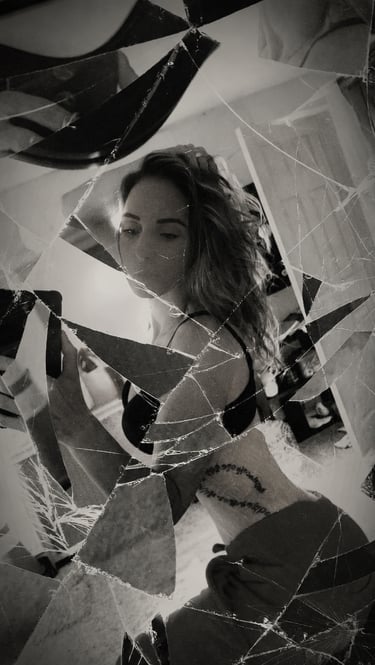
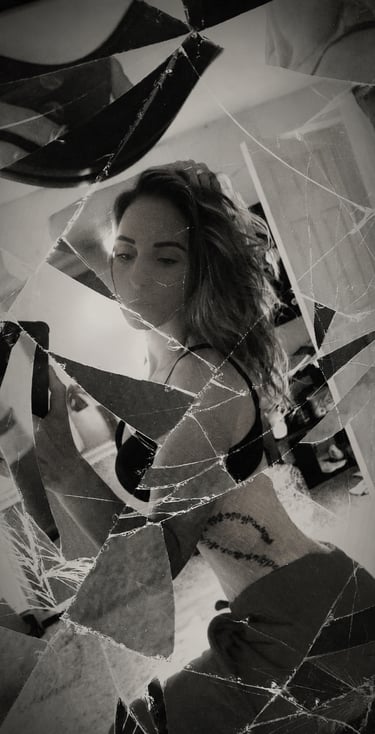
Anorexia nervosa is one of the deadliest mental illnesses in the world, yet many people misunderstand what it actually looks like. This personal story explores how body shaming, trauma, perfectionism, control, and emotional pain shaped a decades-long struggle with food, restriction, body image, and recovery.
I think I was around 12 years old the first time I truly became aware of my body in a negative way.
Before that, I was just a kid. I wasn’t counting calories. I wasn’t analyzing my thighs in mirrors. I wasn’t standing sideways wondering if I looked “big.” I existed in my body without constantly judging it.
Then one sentence changed something in me.
My mom’s boyfriend called me “thunder thighs.”
Even writing those words at 43 years old still hits something inside me.
People underestimate how deeply children absorb comments about their appearance, especially when those comments come from adults. What may have been a careless joke to him became a core memory for me. One sentence rewired the way I saw myself.
After that moment, I became hyperaware of my body.
I remember walking and hearing my legs in my own head. Boom. Boom. Boom. Suddenly I felt heavy. Huge. Loud. I no longer felt like a tiny 5’2 little girl. In my mind, I became “the thunder thighs girl.”
That’s the scary thing about shame. Once it enters your mind, it changes the lens you see yourself through.
Not long after that, I started restricting food.
Not dramatically at first. Quietly. Slowly. Like most eating disorders begin.
Skipping little things. Eating less. Walking more. Trying to shrink myself physically because emotionally I suddenly felt enormous.
Then around age 14, I became interested in modeling through Barbizon. Looking back now, I realize how badly I wanted validation. I wanted someone to tell me I was pretty enough. Thin enough. Good enough.
The problem was I was underage and needed parental involvement. My mom didn’t want to do it. She told me things like I wasn’t tall enough and basically made me feel like there was no point trying anyway.
I remember how discouraging that felt.
When you already feel insecure and then someone confirms your fear that you aren’t enough, it stays with you.
So I restricted more.
Walking became obsessive. Food became emotional. Control became everything.
That’s one of the biggest misconceptions about anorexia nervosa. People assume it’s simply about wanting to be skinny, but for many people, eating disorders are deeply connected to emotional control, perfectionism, trauma, anxiety, and self-worth.
For me, restriction became something nobody could take from me.
Nobody could force me to eat.
Nobody could control my body except me.
And in a twisted way, that made me feel powerful.
In high school, I became fascinated with anorexia itself. I actually did an English project researching eating disorders, almost like part of me was trying to understand what was happening to me without fully admitting I was living it.
I learned that anorexia nervosa has one of the highest mortality rates of any mental illness. I learned about malnutrition, heart complications, electrolyte imbalances, infertility, osteoporosis, organ damage, hair loss, lanugo growth, fainting, cognitive decline, depression, anxiety, and obsessive behaviors surrounding food and exercise.
I knew the facts.
That’s the strange thing about eating disorders sometimes. Knowledge alone doesn’t stop them.
You can fully understand the dangers while still feeling emotionally trapped inside the behavior.
At my worst, I became obsessed with numbers. Calories eaten. Calories burned. Miles walked. Weight fluctuations. Deficits. Control.
There were periods of my life where I walked fifteen to twenty miles a day.
Not because I loved walking.
Because I felt like I had to.
I became obsessed with staying in negative calorie deficits. Obsessed with “earning” food. Obsessed with shrinking myself smaller anytime life felt emotionally too big.
And honestly? It consumed my life more than people realized.
That’s another misconception about anorexia. People think it means not thinking about food, but honestly, food dominated my thoughts constantly.
I thought about what I could eat. What I shouldn’t eat. How many calories were in it. How long it would take to burn off. Whether I deserved it. Whether eating it made me weak.
Food became math. Morality. Punishment. Fear.
One of the hardest parts of my story to talk about is pregnancy.
When I became pregnant with Kaylee, I didn’t know for three months because I had restricted so heavily that I assumed losing my period was caused by anorexia.
Instead, I was pregnant.
Finding that out filled me with overwhelming guilt.
The first trimester is one of the most important stages for fetal development, and there I was barely nourishing my body. Cereal. Salad. Tiny low-calorie meals. Restriction.
I remember feeling ashamed realizing I hadn’t properly fed my baby because I was so trapped inside my eating disorder.
Once I found out I was pregnant, I started eating more, but fear around food doesn’t magically disappear because circumstances change. Eating disorders don’t work logically.
Then came pregnancy with Hayden, which looked completely different.
I gained a significant amount of weight while pregnant with her. At 5’2, I reached around 183 pounds and felt incredibly uncomfortable in my own body. Looking back now, I understand pregnancy weight is normal and necessary, but at the time my eating disorder brain interpreted weight gain as failure.
That’s what body dysmorphia does. It distorts reality.
Body dysmorphic thoughts convince people they are bigger, worse, uglier, or more flawed than they actually are. It becomes difficult to trust your own reflection because your mind constantly filters it through shame and criticism.
After having Hayden, I lost some weight naturally, but it wasn’t enough for the part of my brain that still measured worth through body size.
So Anna came back.
For those unfamiliar, many people with anorexia refer to the disorder as “Anna,” almost like it becomes its own separate voice living inside your head.
Anna is manipulative.
She tells you control equals safety.
She tells you smaller equals better.
She tells you hunger equals strength.
She lies beautifully.
And every time life felt emotionally chaotic, she came back louder.
After Ryan and I separated, my eating disorder intensified again. Divorce. Custody battles. Emotional instability. My life felt completely out of control, so naturally I clung harder to the one thing I felt I could still manage—food.
Or lack of it.
That pattern repeated itself throughout my life.
Relationship struggles.
Stress.
Emotional pain.
Instability.
Anna always returned offering the same false sense of control.
At one point, I dropped down to 109 pounds again.
People compliment thinness without understanding what’s happening underneath it sometimes, which honestly makes eating disorders even more dangerous. Society rewards weight loss constantly, even when that weight loss is rooted in illness.
Meanwhile, I felt awful.
Weak. Cold. Dizzy. Exhausted. Emotionally drained. Existing in survival mode while pretending everything was normal.
That’s what makes eating disorders so isolating. Many people around you either don’t notice or unintentionally reinforce the behaviors because thinness is so normalized and praised culturally.
People would tell me I looked “great” while my body and mind were falling apart.
Even now, at 43 years old, I still struggle.
Not necessarily every single day. Not always intensely. But the thoughts still exist.
I still catch myself restricting at times. I still feel guilt after overeating sometimes. I still notice moments where stress immediately makes me want to control food again.
The difference now is awareness.
Therapy helped me understand something huge: anorexia was never really about food.
Food was just the tool.
Control was the addiction.
When life felt emotionally unsafe, unpredictable, overwhelming, or painful, restricting food created the illusion of stability. If I couldn’t control relationships, emotions, rejection, heartbreak, chaos, or uncertainty, I could still control my body.
At least that’s what my brain believed.
I’ve also started recognizing how generational some of these patterns can become.
My grandmother barely ate and stayed tiny her entire life. Growing up around that normalized certain behaviors for me. Then later, seeing my own daughter struggle with body image at times forced me to confront the painful reality that children absorb what we model, even unintentionally.
That realization carries guilt too.
The idea that your own pain may quietly shape how your children learn to see themselves.
Eating disorders don’t just affect food. They affect relationships, confidence, identity, energy levels, self-worth, motherhood, social situations, intimacy, mental health, and quality of life.
They become exhausting mental noise that follows you everywhere.
Every meal becomes emotional.
Every mirror becomes complicated.
Every stressful life event risks becoming a trigger.
Recovery is not linear the way people think it is.
There are periods where the thoughts get quieter. There are periods where stress wakes them back up again. There are moments of progress followed by moments of struggle.
That doesn’t mean recovery is failing.
It means recovery is human.
Right now, where I’m at in life is trying to be mindful instead of perfect.
I try to eat at least one balanced meal every day. I try to snack consistently. I try to recognize when restriction starts becoming emotional instead of physical. I try to interrupt harmful thought patterns sooner than I once did.
Some days are easier than others.
Some days Anna still gets loud.
But I’m trying.
And honestly? I think people underestimate how much strength there is in continuing to fight a mental battle that’s lasted over thirty years.
Eating disorders don’t always disappear neatly. Recovery rarely looks inspirational or beautifully wrapped up in a perfect ending. Sometimes recovery looks messy. Sometimes it looks like eating while your brain argues against it. Sometimes it looks like recognizing harmful thoughts without acting on them.
Sometimes it simply looks like surviving one hard day differently than you used to.
I don’t have this fully figured out.
I still struggle.
I still overthink.
I still battle control issues around food and my body.
But I’m finally starting to understand something important:
Surviving is not the same thing as living.
For years, I focused on becoming smaller physically while my disorder quietly consumed bigger and bigger parts of my life emotionally.
Now I’m trying to learn how to take up space without apologizing for it.
And honestly?
That might be the hardest part of recovery yet.
~Tj 🖤