Real life. Real thoughts. The messy middle of motherhood, mental health, and figuring it out. The space between staying and leaving, between healing and hurting.
Self-Care That Actually Works: How Exercise Helps My Mental Health
Exercise isn't just about weight loss or physical fitness. Discover how movement supports mental health, reduces stress, improves mood, and became one of the most important tools in my healing journey.
5 min read
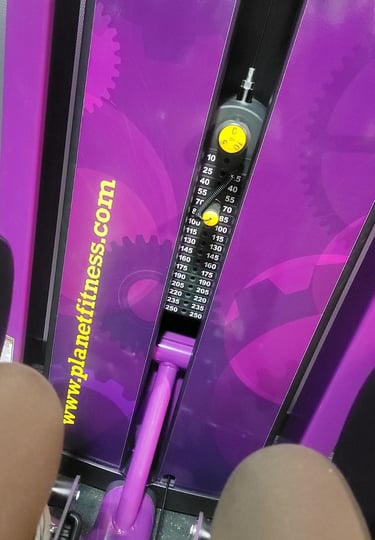

When people talk about self-care, the conversation usually revolves around bubble baths, face masks, scented candles, spa days, or taking a break from responsibilities. While there is absolutely nothing wrong with those things, I've learned that the most effective form of self-care for my mental health doesn't happen while I'm sitting still.
It happens when I move.
That probably sounds strange coming from someone who has spent plenty of days wanting to stay in bed, avoid the gym, cancel plans, and disappear under a blanket. If you live with anxiety, depression, bipolar disorder, borderline personality disorder, chronic stress, or even just the everyday overwhelm that comes with being human, you know how difficult motivation can be. There are days when getting dressed feels like an accomplishment. There are days when your brain argues against every healthy decision before you've even had breakfast.
Those are usually the days I need exercise the most.
For years, I looked at fitness the same way many people do. Exercise was something you did to lose weight, improve your appearance, or fit into a certain size of jeans. The focus was always physical. What I didn't fully understand was how powerful movement can be for mental health. The more consistent I've become with exercise, the more I've realized that the benefits have very little to do with what I see in the mirror and everything to do with how I feel inside my own head.
Mental health professionals have long recognized the connection between physical activity and emotional well-being. Research consistently shows that regular exercise can help reduce symptoms of anxiety and depression, improve sleep quality, lower stress levels, increase energy, and support overall emotional resilience. Exercise increases the release of chemicals like endorphins, dopamine, and serotonin, which play an important role in mood regulation. While exercise isn't a cure for mental illness, it can become an incredibly valuable tool alongside therapy, medication, support systems, and healthy coping skills.
I've experienced that firsthand.
As someone living with bipolar disorder, borderline personality disorder, anxiety, depression, chronic insomnia, and a brain that rarely knows how to stay quiet, I've spent years searching for things that help. Some things work temporarily. Some things don't work at all. Some things help until they don't. Mental health can feel like a constant process of learning, adjusting, and trying again.
Exercise has been one of the few things that consistently helps.
That doesn't mean I suddenly leave the gym feeling like a brand-new person. It doesn't mean all my problems disappear. It doesn't mean my diagnoses magically vanish after thirty minutes on a treadmill. What it does mean is that I often leave feeling better than I did when I walked in.
Sometimes that's enough.
One of the biggest misconceptions about mental health recovery is the idea that solutions need to be dramatic. We think if something is going to help, it should create a massive transformation overnight. Real healing rarely works that way. More often, it's a collection of small choices repeated over time. Drinking more water. Going to therapy. Taking medication as prescribed. Getting enough sleep. Going for a walk. Exercising when you'd rather stay home.
Individually, those things may seem small.
Together, they become powerful.
What I've noticed most is that exercise helps interrupt my thought patterns. When anxiety is high, my thoughts tend to race. When depression creeps in, everything feels heavier. When stress builds, my brain can become incredibly loud. Movement forces me to focus on something else. I pay attention to my breathing. I focus on the next step, the next minute, the next set, or the next lap around the gym. For a little while, my brain gets a break from itself.
That alone is valuable.
There are also practical benefits that don't get talked about enough. Exercise provides structure. It gives me somewhere to be. It creates a routine on days when life feels chaotic. Mental health often thrives in consistency, and physical activity has become one of the anchors in my week. Even when everything else feels unpredictable, I know I can show up and move my body.
Not perfectly.
Just consistently.
And consistency matters far more than perfection ever will.
If I'm being completely honest, I don't always want to go. In fact, some days I spend more time arguing with myself than exercising. My brain has a million reasons why skipping would be easier. I'm tired. I'm busy. I'm stressed. I'll go tomorrow. One day won't matter.
I've learned not to trust those thoughts.
Because almost every single time I go anyway, I feel better afterward.
Not because I had the perfect workout.
Not because I broke personal records.
Simply because I showed up.
Showing up counts.
That's a lesson that extends far beyond fitness.
The same principle applies to healing, parenting, relationships, and personal growth. We spend so much time focusing on outcomes that we forget the importance of participation. Sometimes success is simply showing up when you don't feel like it. Sometimes the victory isn't the workout itself. It's making the decision to walk through the door.
For anyone struggling with anxiety, depression, or other mental health challenges, it's important to know that exercise doesn't have to be extreme to be effective. You don't need expensive equipment, a personal trainer, or a complicated fitness plan. You don't need to run marathons or spend hours in the gym.
A walk counts.
Ten minutes counts.
Stretching counts.
Dancing in your kitchen counts.
Taking the stairs counts.
The goal isn't perfection. The goal is movement.
One of the reasons exercise works so well as a form of self-care is because it addresses both physical and emotional health simultaneously. We often separate the two, but they're deeply connected. Stress affects the body. Anxiety affects the body. Depression affects the body. The relationship goes both ways. When we take care of our physical health, we're often supporting our mental health at the same time.
I've noticed improvements in my mood, stress levels, confidence, emotional regulation, and overall resilience. Have bad days disappeared? Absolutely not. I still struggle. I still have difficult moments. I still have symptoms. What has changed is my ability to cope with them.
Exercise gives me another tool.
And when you're navigating mental health, tools matter.
More than anything, movement reminds me that I'm capable of doing hard things. Every workout is a small promise I keep to myself. Every time I show up, I'm proving that my feelings don't always get to make my decisions. Some days motivation leads. Other days discipline does the heavy lifting.
Either way, I move.
That's what self-care has come to mean for me.
Not escaping life.
Supporting myself through it.
Not avoiding discomfort.
Building resilience.
Not waiting until everything feels better.
Doing something that helps me feel a little stronger while I'm still in the middle of the struggle.
The truth is that self-care isn't always soft. Sometimes it looks like rest. Sometimes it looks like saying no. Sometimes it looks like therapy, boundaries, medication, or asking for help.
And sometimes it looks like dragging yourself to the gym when your brain is loud, your mood is low, and every excuse in the world is telling you to stay home.
Those are usually the days that remind me why I started in the first place.
Because movement may not solve everything.
But staying still rarely helps me either.
And that's why exercise remains one of the most effective forms of self-care I've ever found.
~ Tj🩷