Real life. Real thoughts. The messy middle of motherhood, mental health, and figuring it out. The space between staying and leaving, between healing and hurting.
I’m Not Easy to Love—But There’s a Reason for That
I have traits I’m not proud of—sharp words, impatience, impulsive reactions, and moments where I’ve hurt people before they could hurt me. I’m also self-aware enough to see it happening in real time… and sometimes still do it anyway. Because these behaviors weren’t random—they were built as protection.
5 min read
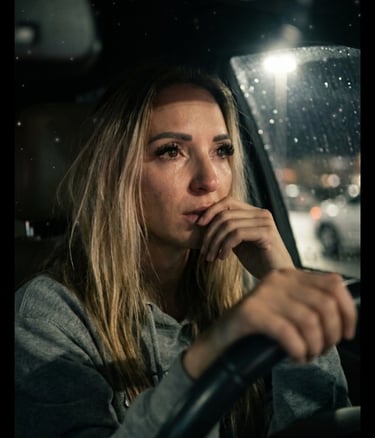

I’m not going to sit here and pretend I’m soft all the time. I’m not. My words can cut. They land sharp without warning. I can be impatient, impulsive, reactive. I feel things fast, often before I’ve had time to think them through. I’ve said things I wish I could take back. I’ve hurt people—especially the ones closest to me. The hard part? I’m self-aware enough to see it happening in real time… yet sometimes still do it anyway. That kind of awareness doesn’t make it easier. It makes it heavier.
This isn’t ignorance. It’s not a lack of care. Something deeper kicks in before logic catches up. My reactions don’t always come from thought—they come from protection. That matters. These behaviors didn’t appear out of nowhere. They aren’t random flaws. They were built. Learned. Reinforced over time. They are defense.
When you grow up around emotional instability or inconsistency, your brain adapts. It becomes quicker, sharper, more reactive. It protects first, processes later. That isn’t weakness. It’s survival. The problem is survival patterns don’t always translate into healthy relationships.
That’s where things shift. What once protected you starts hurting the people you care about. The same instincts that kept you safe begin showing up as defensiveness, emotional intensity, or distance. To someone else, it feels overwhelming. Then the cycle starts. You react. They pull back. You feel that shift instantly. You react again—stronger this time. They withdraw more. Something small turns into something broken before either of you can stop it.
That’s when the label shows up. “I’m not easy to love.” Maybe that’s true on the surface, but it’s not the full story. Being “hard to love” isn’t always about being difficult. It often comes from feeling everything at a level that doesn’t match the moment. It comes from reacting through old wounds that haven’t fully healed.
From a psychological standpoint, patterns like this connect to trauma responses, attachment styles, and conditions like borderline personality disorder, where emotional intensity and fear of disconnection are heightened. That doesn’t make someone broken. It means their emotional system is wired to protect—just sometimes too strongly.
Why Self-Awareness Doesn't Automatically Create Self-Control
One of the biggest misconceptions about emotional growth is that once you become self-aware, you'll automatically stop repeating unhealthy patterns. Unfortunately, awareness and regulation are two completely different skills.
Self-awareness is recognizing that you're triggered.
Self-control is choosing not to react from that trigger.
Self-awareness is hearing your tone change.
Self-control is adjusting it.
Self-awareness is realizing you're becoming defensive.
Self-control is pausing before responding.
The frustrating part is that many of us develop awareness long before we develop regulation. We know exactly what's happening, yet our nervous system is still operating from old survival patterns. That's why growth often feels slower than we want it to.
Signs You're Becoming More Emotionally Aware
Growth doesn't always look like staying calm.
Sometimes growth looks like:
Recognizing a trigger sooner.
Taking accountability after a reaction.
Understanding where your emotions are coming from.
Apologizing when necessary.
Questioning your assumptions instead of treating them like facts.
Catching yourself mid-spiral instead of hours later.
Those things may not feel significant, but they are often the earliest signs of real change.
Frequently Asked Questions About Emotional Intensity
Why do I react so strongly to small things?
Often, the reaction isn't about the current situation alone. Past experiences, attachment wounds, trauma, and accumulated stress can make small moments feel much larger emotionally.
Can self-awareness make things harder?
Absolutely. There is a period where you're aware of your patterns but haven't fully learned how to change them yet. That can create frustration, guilt, and emotional exhaustion.
Does understanding my past excuse my behavior?
No. Understanding your past provides context, not permission. Healing requires both self-compassion and accountability.
Can emotionally intense people have healthy relationships?
Absolutely. Emotional intensity isn't the problem. Learning how to communicate, regulate, and take responsibility for reactions is what determines whether that intensity becomes connection or conflic
For me, it looks like this: I can move from calm to overwhelmed faster than I’d like. Hurt hits deeper than it should. I recognize my reactions, yet stopping them in the moment isn’t always simple. It’s exhausting. Not just for other people—for me. I don’t want to hurt the people I love. I don’t want to feel misunderstood. I don’t want to live in that space of being “too much” while also feeling like I’m not enough.
But I also won’t pretend I’m something I’m not. I’m not always easy. I require patience, consistency, clear communication. I need people who don’t shut down when things get uncomfortable—those moments matter most. That’s the part people miss. Yes, I can be intense. I’m also loyal. Deeply so. I show up. I care beyond surface level. When I’m in, I’m all in. That kind of love doesn’t exist halfway.
There’s another part of this that doesn’t get talked about enough. It’s not just how I react—it’s how I feel everything leading up to it. The build-up. The tension. The way something small can sit in my chest and grow heavier by the second. What looks like an overreaction from the outside usually started long before the moment anyone else noticed.
It’s layered. It’s remembering things I wish I didn’t. It’s reading into tone, silence, shifts in energy. It’s feeling distance before it’s even real. My brain doesn’t always wait for proof—it fills in the blanks on its own. Not to create problems, but to protect me from being caught off guard.
That’s the exhausting part. Even when nothing is wrong, it can feel like something is. When it finally spills out, it looks like too much. Too emotional. Too intense. What people don’t see is how long I held it in before it reached that point.
That’s why I say I’m not easy to love. Not because I don’t love well—but because I feel deeply, react quickly, and process things in a way that doesn’t always look calm or controlled.
But there’s another side to that same intensity. The same depth that makes me hard to handle sometimes is the same depth that makes me love the way I do. It’s why I notice the little things. Why I care as much as I do. Why I show up fully, not halfway. Why I don’t do surface-level anything.
There’s no low setting with me. It’s all or nothing.
I’m learning that instead of trying to erase that part of myself, I need to understand it. Manage it. Take responsibility for it without shaming myself for having it in the first place. Because I’m not too much. I’m just not built for shallow.
What I’ve learned is this—self-awareness isn’t the finish line. It’s the starting point. Knowing your patterns gives you the chance to change them. Not perfectly. Not overnight. Intentionally. It means pausing when everything in you wants to react. Taking accountability without collapsing into guilt. Understanding your past explains you—it doesn’t give you permission to keep hurting people.
Some days I get it right. Some days I don’t. Sometimes I catch it before it happens. Other times I realize it after. Still… I’m trying. That matters more than pretending I have it all together.
The truth is—I’m not hard to love. I’m just not simple. There’s a difference.
~Tj 🩷