Real life. Real thoughts. The messy middle of motherhood, mental health, and figuring it out. The space between staying and leaving, between healing and hurting.
I Am Not a Label
Mental health diagnoses can provide answers, treatment, and support, but they can also create stigma and misunderstanding. A deeper look at bipolar disorder, borderline personality disorder, anxiety, depression, and the challenge of separating identity from diagnosis.
~Tj🩷
5 min read
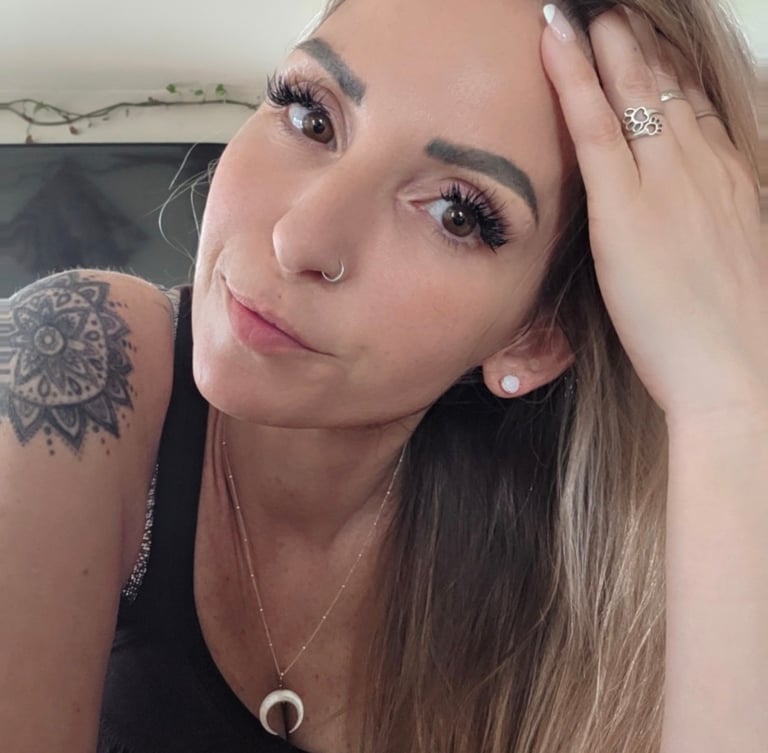

Mental health diagnoses are supposed to help us.
At their best, they provide answers to questions that may have existed for years. They help doctors create treatment plans, therapists develop strategies, and patients better understand their symptoms. For millions of people living with anxiety, depression, bipolar disorder, post-traumatic stress disorder, and other mental health conditions, receiving a diagnosis can be a turning point. It offers validation. It provides language for experiences that once felt confusing and isolating.
For many people, it brings relief.
Finally, there is a reason.
Finally, there is an explanation.
Finally, there is a place to start.
Mental health awareness has grown significantly over the past decade, and that progress matters. More people are seeking therapy. More conversations are happening openly. More resources are available than ever before. Yet despite those improvements, many people living with mental illness still encounter a challenge that isn't talked about nearly enough.
The challenge isn't receiving a diagnosis.
The challenge is what happens after.
Because while diagnoses are intended to explain symptoms, they often become identities. Somewhere between the doctor's office and everyday life, a diagnosis can stop being something a person has and start becoming who people believe they are.
That distinction matters more than most people realize.
For years, I struggled with anxiety, depression, emotional regulation, mood instability, and symptoms I couldn't always explain. Eventually, those experiences led to diagnoses that included bipolar disorder, borderline personality disorder, anxiety, depression, and later C-PTSD. Like many people, I spent years searching for answers. When some of those answers finally arrived, part of me felt relieved. There was comfort in understanding that certain struggles weren't personal failures. There was comfort in realizing I wasn't simply "too emotional," "too sensitive," or "too difficult."
The diagnoses helped me understand myself.
They helped me access treatment.
They helped me find therapy.
They helped me begin healing.
What they didn't do was explain who I am.
That's where things become complicated.
Mental health diagnoses are clinical tools. They help professionals identify patterns, symptoms, and treatment needs. They were never designed to summarize an entire human being. Yet that's often exactly what happens.
People hear "bipolar" and think they understand your personality.
People hear "borderline" and assume they know your relationships.
People hear "anxiety" and imagine you're simply nervous.
People hear "depression" and think you're sad.
The reality is far more complex.
Every diagnosis exists on a spectrum. Every person experiences symptoms differently. Every life story is unique. Two people can share the same diagnosis and have completely different experiences, coping mechanisms, strengths, challenges, and outcomes.
Human beings are complicated.
Medical charts are not.
That gap between the complexity of a person and the simplicity of a diagnosis is where much of the stigma surrounding mental illness continues to exist.
Mental health stigma doesn't always look like outright discrimination. Sometimes it shows up in subtle ways. Conversations change. People become cautious. Emotions are questioned. Reactions are analyzed. Suddenly, normal human experiences become filtered through a diagnostic lens.
Feel frustrated?
Must be the bipolar disorder.
Feel abandoned?
Must be the borderline personality disorder.
Feel overwhelmed?
Must be anxiety.
Need space?
Must be depression.
Over time, many people living with mental illness begin experiencing something that psychologists sometimes refer to as "self-stigma." Instead of simply managing symptoms, they begin internalizing the labels themselves. They stop saying, "I have anxiety," and start believing, "I am anxiety." They stop seeing a diagnosis as part of their experience and start seeing it as their entire identity.
That can be incredibly damaging.
Research consistently shows that mental health stigma can impact self-esteem, relationships, treatment outcomes, and recovery. People who feel defined by their diagnoses are often more likely to withdraw socially, avoid seeking support, or view themselves through a negative lens. In some cases, the label becomes heavier than the symptoms themselves.
I understand that feeling.
There were years when I felt like every conversation about my mental health started and ended with a diagnosis. It was as if everything else about me had become secondary. The labels explained part of my story, but they didn't explain my love for my daughters. They didn't explain my sense of humor. They didn't explain my resilience, my creativity, my friendships, my dreams, or my desire to help other people feel less alone.
Those things matter too.
In fact, they're often the most important parts.
One of the biggest lessons I've learned through therapy, DBT, and self-reflection is that healing isn't about eliminating every symptom. It's about learning how to build a meaningful life alongside them. Mental health recovery doesn't require becoming someone entirely different. It requires learning how to manage symptoms while still pursuing relationships, goals, experiences, and personal growth.
That shift in perspective changed everything for me.
Instead of focusing exclusively on what was wrong, I started paying attention to what was still right.
I am a mother.
I am a writer.
I am a friend.
I am someone who finds peace in the woods.
I am someone who loves beauty, self-care, and personal growth.
I am someone who laughs loudly, loves deeply, and keeps trying even when things are difficult.
Those things are just as true as any diagnosis.
Maybe even more true.
Mental health diagnoses can explain behavior patterns, emotional struggles, and treatment needs. They can provide clarity and direction. They can connect people to life-changing resources. None of that should be minimized. Diagnoses save lives every day because they help people access appropriate care.
But they should never become the entire story.
A diagnosis can explain why certain things are difficult.
It cannot explain your character.
It can explain symptoms.
It cannot explain your purpose.
It can explain struggles.
It cannot explain your worth.
Those are two very different things.
The truth is that every person is more than the worst thing listed in their medical chart. Every person is more than their hardest day, most difficult symptom, or biggest struggle. We are collections of experiences, relationships, strengths, mistakes, dreams, and stories that can never be fully captured by a single word.
That's why conversations about mental health need to continue evolving. Awareness is important, but understanding is even more important. The goal shouldn't simply be teaching people the names of diagnoses. The goal should be helping people see the human beings behind them.
Because behind every diagnosis is a person trying to navigate life the best they can.
A person who wants to be understood.
A person who wants to be seen.
A person who wants to be valued for more than their struggles.
That's true for me.
It's true for millions of others.
And it's a reminder worth holding onto.
I understand why the labels exist.
I'm grateful for many of them.
They helped me find answers.
They helped me find treatment.
They helped me begin healing.
But they don't tell you who I am.
They don't tell you how fiercely I love my daughters.
They don't tell you how many times I've started over.
They don't tell you how hard I've fought to stay here.
They don't tell you what makes me laugh, what breaks my heart, or what gives me hope.
They don't tell you my story.
Because I am not a label.
I am a person.
And so are you.
~ Tj🩷