Real life. Real thoughts. The messy middle of motherhood, mental health, and figuring it out. The space between staying and leaving, between healing and hurting.
Dating With a Diagnosis: Do You Tell Them or Keep It to Yourself?
Deciding whether to share a mental health diagnosis in relationships is deeply personal. Here’s my honest experience choosing not to disclose.
6 min read
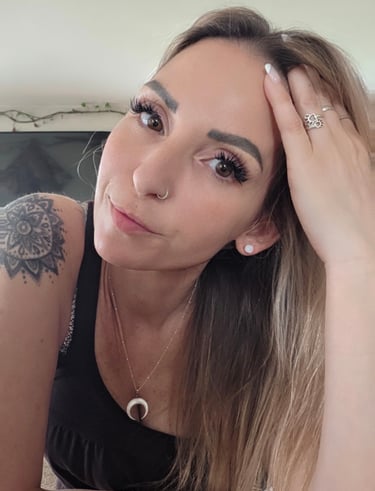
Dating is already complicated. Add a mental health diagnosis into the mix, and it becomes a completely different kind of conversation. It’s no longer just about attraction, compatibility, communication, or whether someone likes the same movies you do. Suddenly there’s another layer sitting quietly in the background. A layer filled with questions about perception, judgment, vulnerability, and trust.
At least for me.
It’s about wondering how someone will interpret me once there’s a label attached to my emotions, my reactions, my patterns, and my experiences. It’s about wondering whether they’ll see me the same way after they know. It’s about wondering whether they’ll continue getting to know me as a person or start filtering everything through a diagnosis.
And if I’m being completely honest, it’s a conversation I’ve never fully had.
Not completely.
I’ve mentioned anxiety before. Anxiety feels safer. It feels more accepted. Most people understand anxiety on some level because they’ve experienced worry, stress, fear, or nervousness at some point in their lives. Mentioning anxiety rarely changes the energy of a conversation. It doesn’t usually create that pause where you can almost see someone mentally rearranging their perception of you.
The other diagnoses feel different.
Because once you say them out loud, you can’t take them back.
They become part of the relationship.
They become information someone now has about you.
And sometimes, whether they mean to or not, they become the lens through which you're viewed.
That’s the part I’ve always struggled with.
I’ve spent years learning about my mental health. I’ve sat in therapy offices. I’ve completed intensive outpatient programs. I’ve worked through DBT skills, medication changes, difficult conversations, and uncomfortable truths. I’ve done the work. I continue to do the work. Yet even with all of that growth, there’s still a part of me that hesitates when it comes to sharing certain diagnoses with someone I’m dating.
Not because I’m ashamed.
Not because I’m hiding.
But because I know how quickly people can stop seeing the person and start seeing the label.
Mental health awareness has improved dramatically over the last decade. Conversations about anxiety, depression, ADHD, trauma, Bipolar Disorder, and Borderline Personality Disorder happen far more openly than they used to. That’s a good thing. Increased awareness has helped reduce stigma, encouraged treatment, and helped people feel less alone.
Unfortunately, awareness and understanding are not always the same thing.
Research consistently shows that fear of judgment remains one of the biggest reasons people hesitate to discuss mental health with others. Many people living with mental health conditions worry about being misunderstood, rejected, stereotyped, or viewed differently after disclosing a diagnosis. In romantic relationships, those fears can feel even more significant because the stakes feel higher.
When feelings are involved, vulnerability feels riskier.
Part of the problem is that many diagnoses carry assumptions.
People hear Bipolar Disorder and immediately picture instability.
People hear Borderline Personality Disorder and immediately picture toxicity.
People hear depression and imagine sadness.
People hear anxiety and imagine nervousness.
The reality is far more complicated.
Bipolar Disorder is a mood disorder involving periods of depression and elevated mood states such as hypomania or mania. Borderline Personality Disorder often involves emotional sensitivity, difficulties with emotional regulation, fear of abandonment, and challenges with identity and relationships. Neither diagnosis can be accurately explained in a single sentence, and neither diagnosis tells someone who you are as a person.
A diagnosis explains experiences.
It doesn't explain character.
It doesn't tell someone whether you're kind, compassionate, loyal, funny, self-aware, hardworking, loving, or resilient. It doesn't tell someone how many therapy appointments you've attended, how many books you've read, how many coping skills you've practiced, or how much effort you've invested into becoming healthier.
It doesn't tell someone how hard you've fought.
That's why this conversation feels so complicated.
Because when you disclose a diagnosis, you're often sharing information that people don't fully understand. You're trusting them to look beyond stereotypes and assumptions. You're hoping they'll see the context instead of the label.
Sometimes they do.
Sometimes they don't.
And that's what makes vulnerability feel risky.
So instead, I often let people get to know me first. They see my personality, my humor, my quirks, my strengths, and my flaws. They see my good days and my bad days. They see how I communicate, how I care about people, how I show up in relationships, and how I move through the world. They experience me as a whole person before they ever hear a diagnosis.
I let them form their own opinions first.
That approach isn't perfect.
Sometimes it means there are parts of me I don't fully explain. Sometimes it means I give surface-level answers when there are deeper ones available. Sometimes it means carrying information that feels important while wondering whether now is the right time to share it.
Not because I’m hiding.
Because I’m deciding.
There’s a difference.
For a long time, I thought honesty meant immediate disclosure. I thought being open meant putting everything on the table from the beginning. Over time, however, I've learned there's a difference between honesty and access.
Being honest doesn't mean giving everyone unrestricted access to every part of you.
Being honest means being truthful.
Access is earned.
Trust is earned.
Vulnerability is earned.
Those things develop through consistency, respect, communication, and emotional safety. They develop when someone repeatedly shows you they can handle important information with care.
Mental health professionals often agree that there is no universal timeline for disclosure in relationships. Some people share immediately because transparency is important to them. Others wait until trust has been established. Neither approach is automatically right or wrong. The healthier question is often not "When should I tell them?" but "Have they shown me they're capable of hearing it?"
That question changed everything for me.
Because it shifted my focus away from obligation and toward trust.
Not everyone deserves access to every part of your story immediately.
Not everyone has earned the right to understand your deepest struggles.
Not everyone has demonstrated the emotional maturity required to hold that information responsibly.
And that's okay.
One of the biggest lessons I've learned is that a diagnosis is not the same thing as a red flag.
A diagnosis is information.
A red flag is behavior.
Someone can live with Bipolar Disorder and communicate effectively.
Someone can live with Borderline Personality Disorder and maintain healthy relationships.
Someone can have anxiety and be emotionally available.
Someone can have depression and still be a wonderful partner.
At the same time, someone with no diagnosis whatsoever can be dishonest, manipulative, emotionally unavailable, disrespectful, or unhealthy.
The diagnosis itself doesn't determine relationship quality.
Behavior does.
Accountability does.
Effort does.
Growth does.
That's why I wish more people understood that mental health conditions don't automatically define relationship outcomes. What matters most is how someone manages their mental health, how willing they are to grow, and how committed they are to taking responsibility for themselves.
There have been moments where I've considered sharing everything. Moments where I thought maybe this is the person. Maybe this is the conversation. Maybe this is the time to explain the entire story.
Part of me wants that.
Part of me wants someone to hear it all and simply say, "Okay."
No panic.
No assumptions.
No analysis.
No change.
Just acceptance.
Because that's really what most of us are looking for, isn't it?
Not someone to fix us.
Not someone to diagnose us.
Not someone to save us.
Just someone willing to understand us.
And I think that's why I continue approaching this conversation carefully. Not because I'm ashamed of my diagnoses, but because I've worked too hard to become more than them. I've spent too many years learning, healing, growing, and rebuilding parts of myself to allow a label to become the most interesting thing about me.
I'm a mother.
A friend.
A writer.
A woman who overthinks.
A woman who cares deeply.
A woman who continues showing up even when it's hard.
The diagnoses are part of my story.
They are not the entire story.
And maybe that's what I've been trying to protect all along.
Not the diagnoses.
My humanity.
Because before I'm a diagnosis, I'm a person.
And that's how I want to be known.
~ Tj 🩷