Real life. Real thoughts. The messy middle of motherhood, mental health, and figuring it out. The space between staying and leaving, between healing and hurting.
But You're So Pretty. What Do You Have to Be Sad About?
Mental health struggles don't discriminate based on appearance. This honest article explores depression, anxiety, self-worth, body image, and the harmful assumption that attractive people can't struggle with mental health.
5 min read
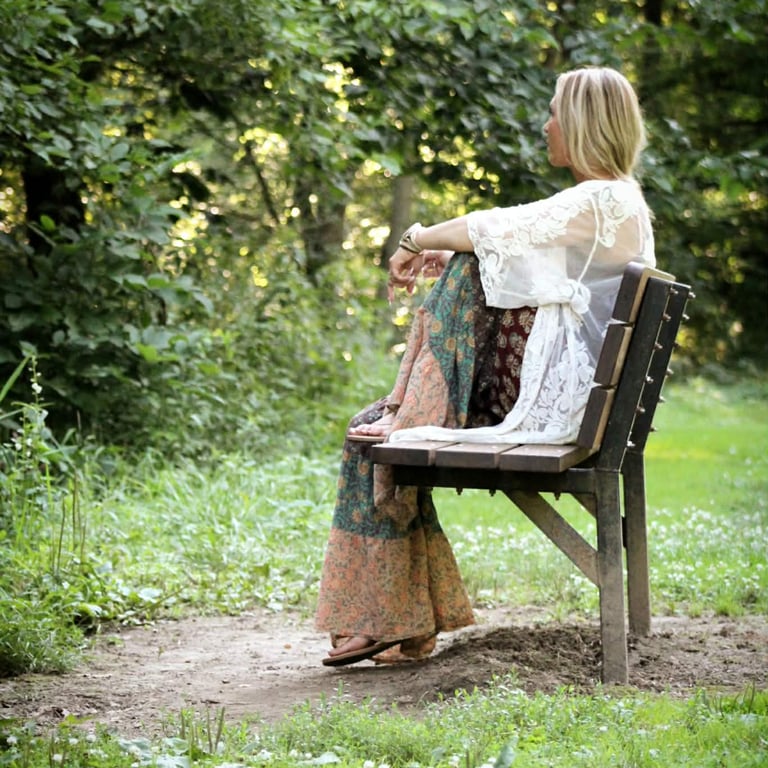
One of the strangest misconceptions about mental health is the belief that attractive people somehow have fewer reasons to struggle. Nobody usually says it that directly. Instead, it shows up in comments that sound harmless on the surface.
"But you're so pretty."
"If I looked like you, I'd be happy."
"You have nothing to be sad about."
"Have you looked in the mirror lately?"
Most people mean those comments as compliments. They genuinely believe they're offering encouragement. The problem is that those statements often reveal something much larger about how society views beauty, happiness, self-worth, and mental health.
Somewhere along the way, we've created this strange idea that external appearance and internal well-being are connected. We assume that if someone is attractive, they must also be confident. If they're confident, they must be happy. If they're happy, they certainly can't be struggling with anxiety, depression, trauma, loneliness, financial hardship, low self-esteem, or mental illness.
Reality doesn't work that way.
I know because I've spent a good portion of my life hearing variations of the same message while privately fighting battles nobody could see.
I remember one conversation years ago while I was working at a salon inside Walmart. During a break, I found myself outside talking with a woman who worked as a cart pusher. Somewhere in our conversation she made a comment that caught me completely off guard. She said I probably didn't struggle the way she did because I was pretty.
She wasn't being cruel.
She wasn't being sarcastic.
She genuinely believed it.
Looking back, I don't think she was really talking about me at all. I think she was talking about the story she had been told her entire life. The story that attractive people have easier lives. The story that beauty creates happiness. The story that confidence naturally follows compliments.
What she couldn't see was that while she was looking at me wishing she looked like me, I was standing there wishing I could see myself the way she did.
That moment stayed with me for years because it perfectly captured how disconnected appearance can be from reality.
More recently, I had a similar experience while talking with my aunt about attending Intensive Outpatient Therapy (IOP). I was opening up about my mental health, my struggles, and the work I was doing to get better. Her response came from a place of love, but it landed in a way that felt painfully familiar.
"Why are you doing that? Have you looked in the mirror? You're beautiful."
Again, the assumption was that beauty should somehow cancel out pain.
As if mental health struggles require permission.
As if being attractive automatically protects someone from emotional suffering.
As if a compliment can override years of anxiety, depression, trauma, emotional dysregulation, self-doubt, or mental illness.
I wish it worked that way.
Trust me.
If beauty cured mental health conditions, therapists would be out of business, psychiatric medications would disappear overnight, and Sephora would probably start accepting health insurance.
Unfortunately, mental health doesn't care what you look like.
Research consistently shows that mental health disorders affect people across every demographic imaginable. Depression, anxiety disorders, Bipolar Disorder, Borderline Personality Disorder, PTSD, eating disorders, and countless other mental health conditions impact people regardless of appearance, income, education, relationship status, or social standing.
Mental illness doesn't check your bank account before showing up.
It doesn't ask how many followers you have.
It doesn't care whether other people think you're attractive.
Pain doesn't discriminate.
One of the biggest lessons I've learned throughout my mental health journey is that self-worth and appearance are not the same thing. Society often treats them as if they're interchangeable, especially for women. We're taught that beauty is the prize. Beauty is supposed to create confidence, unlock happiness, attract love, and solve insecurities.
But confidence doesn't come from being told you're beautiful.
Confidence comes from the relationship you have with yourself.
Those are two completely different things.
Someone can receive compliments every day and still hate what they see in the mirror.
Someone can be admired by others and still feel completely disconnected from themselves.
Someone can be considered attractive by society's standards and still struggle with body image, self-esteem, depression, anxiety, or feelings of worthlessness.
The outside world doesn't automatically become the inside world.
That's something I wish more people understood.
Because when someone opens up about their mental health, they're usually not looking for reassurance about their appearance. They're looking to be heard. They're looking for connection. They're looking for someone willing to sit beside them in the discomfort instead of trying to explain it away.
There's a huge difference between validating someone's pain and accidentally dismissing it.
When someone says they're struggling and the response becomes, "But you're so pretty," the conversation often shifts away from what they're actually trying to communicate. The focus moves from their emotional experience to their appearance, and those two things aren't remotely the same.
Imagine telling someone your leg is broken and having them respond by complimenting your haircut.
That's what it feels like sometimes.
The compliment isn't bad.
It's just unrelated to the problem.
What makes this topic even more complicated is the fact that many people silently struggle with body image regardless of what others see. Studies have shown that body dissatisfaction affects a significant percentage of women and increasingly affects men as well. Social media, beauty standards, comparison culture, filters, editing apps, and constant exposure to idealized images have created an environment where many people struggle to see themselves clearly.
The result is a strange disconnect.
The world may see one version of you.
You may see something completely different.
For years, I thought if I could just change enough things about myself, I'd finally feel confident. Maybe if I lost weight. Maybe if my skin looked different. Maybe if I fixed this. Maybe if I improved that. The goalpost always moved. Every time I reached one target, another appeared.
That's because self-worth isn't something you achieve.
It's something you build.
And that's a much harder lesson to learn.
The older I get, the more I realize that almost everyone is carrying something invisible. Some people are carrying grief. Some are carrying trauma. Some are carrying anxiety. Some are carrying financial stress. Some are carrying loneliness. Some are carrying mental illness. Most of us are carrying things the people around us know absolutely nothing about.
That's why assumptions are so dangerous.
They convince us we understand someone's life when we've only seen the packaging.
And people are so much more than their packaging.
These days, when someone tells me I shouldn't struggle because I'm pretty, part of me still laughs. My dark humor immediately wants to respond, "Yeah, pretty fucking crazy."
It's funny because it's absurd.
But underneath the joke is something deeper.
A reminder that being seen and being understood are two completely different things.
Being seen is easy.
Being understood is rare.
And maybe that's what all of us are really looking for.
Not compliments.
Not assumptions.
Not explanations.
Just understanding.
Because mental health doesn't discriminate.
Pain doesn't care what someone looks like.
And looking okay has never been the same thing as actually being okay.
Trust me.
I know.
~ Tj 🩷