Real life. Real thoughts. The messy middle of motherhood, mental health, and figuring it out. The space between staying and leaving, between healing and hurting.
Beauty, But Make It Real
After more than two decades in the beauty industry, I've learned that beauty isn't really about looking perfect. It's often tied to confidence, aging, mental health, self-worth, and how we feel when we look in the mirror. Here's what I wish more women knew.
~Tj🩷
5 min read
I've been in the beauty industry since 2001, and if there's one thing I've learned after more than two decades of doing hair, talking skincare, and listening to women talk about themselves, it's this: beauty is rarely about beauty.
That probably sounds strange coming from someone whose career was built around appearance. After all, I've spent years helping people look their best. I've watched trends come and go, seen products become overnight sensations, and lived through enough beauty fads to know that most of them eventually end up forgotten in the back of a bathroom drawer. But underneath all the appointments, treatments, and conversations, I've noticed something. Women almost never sit down and ask questions that are really about their hair, skin, or wrinkles.
The conversation underneath the conversation is usually much deeper.
Women ask if they should go lighter with their hair color. They ask if their wrinkles are noticeable. They ask if they need Botox, if they should lose weight, if a skincare product is worth buying, or if a treatment will make them look younger. On the surface, those sound like beauty questions. But after twenty-four years of hearing them, I don't think they are.
What we're really asking is: Am I still enough?
Nobody says it that way, of course. It would be far too vulnerable. Instead, we hide it behind questions about our appearance. We talk about our roots, our skin, our bodies, and our age when what we're really talking about is our value. We want reassurance that we're still attractive, still relevant, still worthy, still seen.
And if I'm being honest, I'm not just talking about other women.
I'm talking about me too.
One of the funniest misconceptions people have about me is that they think I'm confident. I've heard people say things like, "She knows she's pretty," and every single time I hear it, I want to laugh. Not because I'm fishing for compliments, but because it couldn't be further from the truth.
People see the lashes.
I see the insecurity.
People see the Botox.
I see the panic that happened when I noticed a new line in my forehead.
People see the skincare routine.
I see the late-night Google searches, the comparison, and the moments spent standing too close to a mirror examining flaws nobody else would ever notice.
What people often mistake for confidence is actually maintenance.
And sometimes, if we're being really honest, it's insecurity in a really cute outfit.
The older I've gotten, the more complicated my relationship with beauty has become. In my twenties, beauty felt fun. It was experimentation. It was trends. It was trying things because they were exciting. Somewhere along the way, though, beauty became tangled up with aging, identity, and self-worth.
Nobody really prepares you for that part.
Nobody tells you that one day you'll catch your reflection and feel surprised by the face looking back at you. Not because you look bad, but because you look different. The changes happen slowly enough that you don't notice them day by day, but then one morning you do. A line appears. Your skin changes. Your face looks a little more tired than it used to. And suddenly you're grieving something you can't quite explain.
I know aging is a privilege. I truly do. I know there are people who never got the opportunity to grow older. I know every wrinkle represents years lived, memories made, and lessons learned.
I also know that when I find a new wrinkle, my first reaction is usually not gratitude.
Usually it's, "Absolutely not."
Both things can be true.
You can appreciate aging and still struggle with it.
You can understand that beauty isn't everything and still wish your skin looked the way it did ten years ago.
You can believe confidence comes from within and still feel disappointed when you catch yourself under terrible bathroom lighting.
Human beings are complicated like that.
The thing that has surprised me most over the years is realizing how closely beauty and mental health are connected. For me, beauty has never really been about trying to impress other people. I don't get lashes because I'm trying to impress strangers. I don't use tretinoin because I think someone else is paying attention to my skin. I don't microneedle my face, sit under an LED mask, or spend money on skincare because I think it will magically make me happy.
I do those things because they help me feel more like myself.
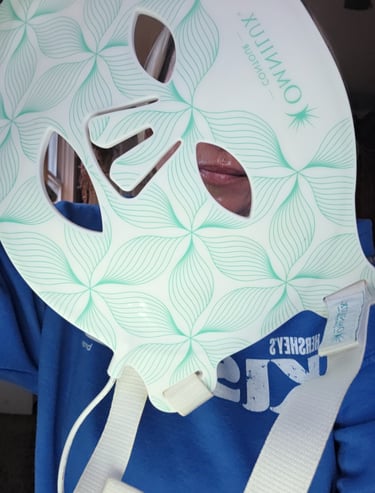
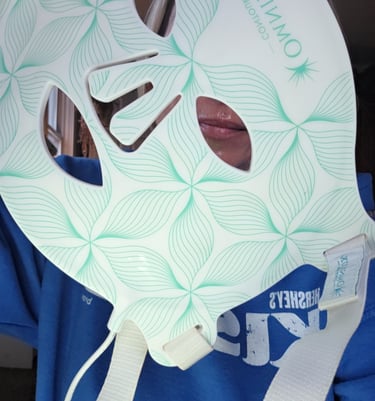
When my anxiety is high, routines help. When depression shows up, self-care can be one of the first things to disappear. I've learned that taking ten minutes to put on my LED mask or spend a little extra time on skincare isn't vanity. It's maintenance—not just for my skin, but for my mental health.
No, skincare doesn't cure depression.
No, Botox doesn't fix anxiety.
No moisturizer in the world is powerful enough to solve trauma.
But there is something grounding about caring for yourself when your brain is trying to convince you that you're not worth the effort.
That's the part beauty influencers rarely talk about.
Beauty isn't always about becoming more attractive.
Sometimes it's about staying connected to yourself.
Sometimes it's about reminding yourself that you're worth caring for.
Sometimes it's about creating a moment of peace in a day that feels chaotic.
And sometimes it's simply about feeling a little better when you look in the mirror.
After more than twenty years in this industry, I've stopped chasing perfection. Not because I've mastered self-acceptance, but because I've finally realized perfection was never the goal. The women I've admired most throughout my career weren't the women with perfect skin, perfect bodies, or perfect hair. They were the women who learned how to be comfortable in their own skin despite their imperfections.
I'm still working on that.
Some days I feel confident. Some days I feel beautiful. Some days I catch my reflection and immediately start critiquing everything I see. The difference now is that I recognize what's happening. I understand that the voice in my head isn't always telling me the truth.
Because after twenty-four years in beauty, the biggest lesson I learned wasn't about skincare, hair, Botox, or anti-aging.
It was this:
The goal isn't to become flawless.
The goal is to feel at home in your own skin.
And honestly?
That's a lot harder than any beauty treatment I've ever tried.
Frequently Asked Questions
Is it vain to care about your appearance?
No. Taking care of your appearance and measuring your worth by your appearance are two very different things.
Can beauty routines help mental health?
They aren't a replacement for therapy or treatment, but self-care routines can create structure, comfort, and moments of mindfulness.
Why does aging affect confidence so much?
Because appearance is often tied to identity. When we change physically, it can bring up emotions we weren't expecting.
What's the biggest beauty lesson you've learned after 24 years?
Beauty isn't about perfection. It's about feeling comfortable, confident, and at home in your own skin.
~Tj🩷