Real life. Real thoughts. The messy middle of motherhood, mental health, and figuring it out. The space between staying and leaving, between healing and hurting.
The Part That Still Hurt
For all the understanding I’ve found… there’s still a part of me that just wants my mom.
7 min read
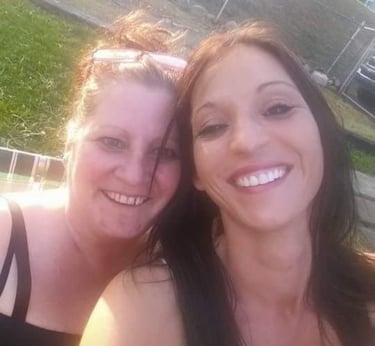
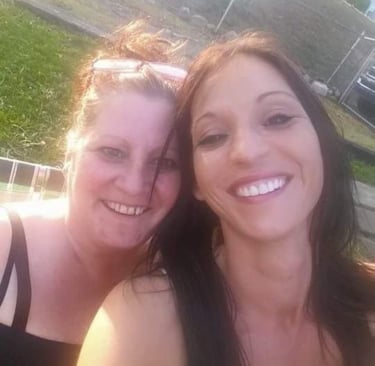
For all the understanding I’ve found, there’s still a part of me that just wants my mom.
There’s a version of me that still exists somewhere underneath all of this—not the grown woman who can process, reflect, and make sense of things, but the little girl who just wants to be held and told everything is going to be okay. That part doesn’t care how much I’ve learned or how much I’ve grown. It doesn’t care about self-awareness or healing language. It just feels.
It shows up in quiet moments and unexpected ones—when I’m tired, when something small hits a little deeper than it should, when my guard is down. And suddenly I’m not reacting as the version of me I’ve worked so hard to become. I’m reacting from a place that feels much younger, a place that still needed something it didn’t fully get.
That’s the part about healing nobody really talks about. You can understand something completely and still hurt from it. You can forgive, process, and grow, and still feel the absence. You can be strong, independent, and self-aware, and still have moments where you just want your mom—not casually, not on the surface, but in a deep, grounding, make-the-world-feel-safe kind of way.
Because no matter how old you get, that relationship shapes you. It becomes your first understanding of comfort, safety, reassurance. And when something about that isn’t steady or isn’t there the way you needed, it leaves a space that doesn’t just disappear with time. You learn to live around it. You learn to function through it. But every now and then, you feel it—and when you do, it’s not small.
Psychologists often refer to parents as our first "secure base." It's the person we're wired to turn toward when we're scared, overwhelmed, hurt, or uncertain. What's interesting is that this need doesn't disappear in adulthood. Research on attachment theory shows that people continue seeking safety and reassurance throughout their entire lives. The faces may change—a spouse, a friend, a therapist—but the need itself remains. It isn't weakness. It isn't immaturity. It's part of being human.
The part that still hurts isn't really about the past anymore. It's about realizing there are some needs that don't expire. I think that's the part nobody prepares us for. As kids, we imagine adulthood as some magical destination where we become completely self-sufficient. Then adulthood shows up with bills, heartbreak, grief, mental health struggles, aging parents, and relationships that don't always work out the way we planned.
Suddenly you're sitting in your car after therapy, crying over something that happened twenty years ago and wondering why you're still affected by it. As kids, we assume there will come a day when we'll stop needing our parents. We imagine adulthood as this finish line where we're completely independent, completely healed, completely self-sufficient. Then life happens. You get your heart broken. You lose friendships you thought would last forever. You struggle with your mental health. You question your marriage. You sit in a therapist's office unpacking things you didn't even realize you were carrying. And suddenly you're forty-something years old and all you want is your mom.
Not because you need her to fix it. Not because you expect her to have all the answers. But because sometimes you want someone to wrap their arms around you and tell you it's going to be okay. I don't think the younger version of me ever wanted perfection. She wasn't looking for some Hallmark movie version of motherhood. She wanted reassurance. She wanted consistency. She wanted to know she mattered. She wanted someone to notice she was hurting without having to explain it first. Most of all, she wanted the kind of comfort that makes the world feel a little less scary.
Research shows that children who consistently receive emotional support often grow into adults with a stronger sense of security in relationships. When emotional support is inconsistent, children adapt. They become independent earlier. They learn to self-soothe. They become caretakers, perfectionists, people-pleasers, overthinkers, or the friend who always says, "I'm fine," while carrying the weight of the world.
Not because they're broken.
Because they're resourceful.
The problem is that coping mechanisms that help us survive childhood don't always help us thrive in adulthood. Sometimes those survival skills become so familiar that we mistake them for personality traits.
Sometimes "I'm just independent" is actually "I learned not to ask for help."
Sometimes "I'm a perfectionist" is actually "I learned mistakes didn't feel safe."
Sometimes "I'm always taking care of everyone else" is actually "I learned my own needs weren't the priority."
Healing has a way of uncovering those things whether we're ready for them or not.
Researchers who study attachment often talk about something called a secure base. A secure base is the person we instinctively turn toward when life feels overwhelming. It's where safety lives. It's where comfort lives. It's where our nervous systems settle. For many people, that's a parent. For some of us, it's more complicated. When the relationship isn't consistently safe, part of you keeps searching for what you didn't fully receive. Not because you're ungrateful. Not because you're stuck. Because you're human.
For a long time, I judged myself for that. I thought healing meant reaching a place where I no longer felt the absence, where I no longer noticed what was missing, where I no longer wished things had been different. But the older I get, the more I think healing is something entirely different. I think healing is being able to acknowledge the hurt without letting it define every relationship around it. It's being able to say, "I needed more," without convincing yourself there was no love. It's being able to grieve the mother you wished for while appreciating the mother you actually have.
And that's much harder than it sounds. Grief is simple. Acceptance is complicated. Grief lets you stay focused on what wasn't there. Acceptance asks you to hold two truths at the same time: the truth that something hurt and the truth that something good existed too. The older I get, the more I realize adulthood is full of those contradictions. I wish things had been different, and I'm grateful for what they were. I still hurt sometimes, and I've healed tremendously. I still wish certain moments had happened differently, and I understand why they didn't. Both things can be true.
Maybe that's why healing feels less like crossing a finish line and more like learning how to carry something differently. The weight doesn't completely disappear. You simply stop letting it crush you. You learn how to make room for both the grief and the gratitude, for both the younger version of yourself and the person you've become. Maybe that's where I am now—not fully healed and not fully hurting, just somewhere in between. The messy middle. Learning how to love the mother I have while grieving the mother I needed, and somehow finding peace in the space between those two things.
I’ve done the work. I’ve looked at things from every angle. I’ve tried to understand, to give grace, to make sense of what I can. And I have. But healing doesn’t erase the part of you that needed something. It just teaches you how to hold that part differently.
Part of that, for me, is accepting something that isn’t easy. I wish I could have my image of her—the version I needed, the version I still, in some quiet way, wish existed. But if I want a relationship with her, I have to accept her as she is. She did what she could. She loved me in the ways she knew how. And maybe that doesn’t fully match what I needed, but it doesn’t mean there was no love there.
So I have to give her grace—not because it erases what hurt, but because it allows me to move forward without carrying all of it as anger. Holding onto only what was missing keeps me stuck in a place I’ve already outgrown.
Maybe in another life it would be different. Maybe in another version of this story, things would have been softer, steadier, easier. But in this life, this is what I have. And I’m learning to appreciate that I even have this version, because some little girls don’t have any version of a mother at all.
That perspective doesn’t take away the hurt, but it changes how I hold it. It softens it just enough to breathe through.
I will grieve the bond I wish I had. I won’t pretend it didn’t matter or minimize what that younger version of me needed. That grief is real, and it deserves space. But I also won’t let it take away from the bond that does exist.
Because two things can be true at once. I can miss what wasn’t there and still appreciate what is. I can feel the ache and still choose connection. I can carry the younger version of me and still move forward as the woman I’ve become.
Therapists often talk about something called reparenting. The first time I heard the term, it sounded like something straight out of a self-help book sitting untouched on a nightstand somewhere.
But the concept is actually simple.
Reparenting means learning how to give yourself some of the emotional support you may not have consistently received growing up. It means speaking to yourself with kindness instead of criticism. It means creating safety for yourself. Setting boundaries. Allowing your feelings to exist without immediately judging them.
In many ways, it's becoming the person your younger self needed.
Not because you're replacing your parents.
Not because you're rewriting history.
But because every version of you deserves care.
Sometimes healing isn't getting the mother you needed.
Sometimes healing is learning how to stop punishing yourself for still wishing you had her.
So I’ll grieve that bond, and I’ll move forward anyway. I’ll do my best to build something real with what we have now—not perfect, not what I imagined, but honest.
And maybe that’s what healing actually looks like. Not fixing the past, but learning how to live with it without letting it break you.
~Tj🩷